Wednesday, June 30, 2021

Alien Nation: The 25th Anniversary of "Independence Day"


By Michael Lyons


Splashed across the top of a newspaper ad for Independence Day (or ID4 as it was dubbed) during the summer of 1996 was a quote from Rolling Stone film critic Peter Travers that read:


"ID4 delivers a full-throttle blast.  It gives you aliens to hiss at, humans to root for, and the kind of fireworks that get audiences cheering."


A summation of why Independence Day was such a mammoth hit doesn't get any more perfect.


This July 4th weekend marks the 25th anniversary of this summer blockbuster that was like an invasion (into movie theaters) unto itself.  Independence Day is from a time in the movie industry when studios knew how to create and market movies as events.  ID4 emerged as the poster child for the colossal blockbuster that so many wanted to see.  


And they did go to see it when it was released on July 3, 1996.  The film grossed over $817 million worldwide, was the biggest film of the year and, at the time, the second highest-grossing movie ever.


Through it all, at the time, there were stories of audiences at showings of Independence Day standing, cheering, and pumping their fists in the theaters.  If movies like 1993's Jurassic Park and 1994's The Lion King were events like concerts, ID4 became like a sci-fi-infused sporting event.


"It's an Independence Day for everyone," summed up Doug Smith, one of the film's two visual effects supervisors, in an interview just before the film's release in 1996.


Director Roland Emmerich and producer Dean Devlin (who co-wrote the script) collaborated on the sci-fi favorite, 1994's Stargate. They seemingly used the all-star 70s disaster movies model as inspiration for an alien invasion story over the July 4th holiday. 


As the aliens in Independence Day close in on Earth, we meet Will Smith as pilot Captain Steven Miller, Bill Pullman as the President, Jeff Goldblum as engineer David Levinson, Robert Loggia as General William Grey, Mary McDonnell as the First Lady, Randy Quaid as an eccentric pilot named Russell and Star Trek's Brent Spiner as the geekish scientist Dr. Okun.


As if that wasn't enough in the jam-packed cast, the number of supporting roles includes Viveca A. Fox as Miller's girlfriend, Margaret Colin as the White House communications director, Judd Hirsch as David's father, and Harvey Fierstein as one of David's co-workers.


As the aliens begin to obliterate everything in their path, there's also an all-star array of visual effects as Independence Day employed every trick in the book to pull off its impressive scenes.  Everything from miniature models and sets to computer-generated imagery was used.


"One of the things that Roland was trying to do was not overcomplicate these shots," said Smith.  "He was trying to strip the ideas down to their bare essentials, so that things didn't get overthought or over ‘synchronized.’”  Smith also added, “This film really encompasses the breadth of visual effects.”


This led to such iconic images as a giant, storm cloud-like alien spaceship hovering over a city, an immense wall of flame engulfing New York, and, probably ID4's most memorable shot: the destruction of the White House.


“The White House explosion was a very scary thing,” said Volker Engel, another of the film’s visual effects supervisors, in a 1996 interview.  “It was a huge model that had to look excellent because everyone on Earth knows what the White House looks like.”


For this sequence, Engel and the team took extra pains when it came to the details.  “I was very closely involved in the dressing and getting the right trees in the foreground so that you have the right scale of the leaves,” said Engel. “We even put furniture in the White House so that when the explosion happens, a lot of stuff is flying. You probably won't see furniture pieces flying towards the camera, but it's one of those things that you would recognize being missing.”


This attention to detail is just one of the many aspects of the film that audiences responded to and made us hate the aliens even more.  The explosion of applause from audiences when Will Smith punches an alien in the face and shouts "Welcome to Earth!" (in the now-famous scene) felt so warranted.  And the equally famous speech by Pullman as the President, where he declares, "Today, we celebrate our Independence Day!" elicited (and still elicits) applause from even the most blasé moviegoer.


All part of the reason why, twenty-five years later, Independence Day is still a fan favorite and now a July 4th movie-watching tradition.


Five years ago, in 2016, nostalgia for the film had culminated in the belated sequel, Independence Day: Resurgence that, unfortunately, disappointed on so many levels and failed to re-capture the spirit (and the box office) of the first film.


So why, twenty-five years later, does Independence Day still emerge each year around this time and elicit those same "event movie" vibes?


In 1996, when answering a question about what makes Independence Day unique and connects the film with audiences, Volker Engel provided a somewhat prophetic answer that still holds true, and seems even more relevant today. 


"I think it's mainly everyone all over the world getting together," he said, adding, "Everyone else has to join forces against something that comes from the outside.  If you want to use a metaphor, it could be something else; it doesn't have to be an alien race; it can be some other catastrophe.  It's just such a beautiful thought that all these people are joining each other."


Happy Independence Day!


Sources: 


Volker Engel interview with Michael Lyons, February 2, 1996.

Doug Smith interview with Michael Lyons, February 12, 1996.


Lyons, Mike, "ID4 Visual Effects:  Supervisors Doug Smith and Volker Engel on Fashioning Alien Armageddon," Cinefantastique, July 1996.


Saturday, June 19, 2021

Say What, Dad? Memorable Quotes from TV's Sitcom Fathers

 By Michael Lyons    


The wisdom that fathers bring to our lives has never been more acutely, or humorously, captured better than in television's most popular sitcoms.


With Father's Day upon us this weekend, here's a look back at the insight...and the laughs... these TV Dads provided through the years:


“Fathers make mistakes too, you know, lots of them. In fact, it's easy for us to make mistakes because we're trying so hard to live up to the perfect picture you painted of us. You're going to have to learn that I'm just an ordinary human being, with a reasonable amount of intelligence, capable of handling most situations. But I'm not a Superman.  I can't bring about miracles. This doesn't mean I'm not going to try to be as you think I am or want me to be.” - Jim Anderson (Robert Young), Father Knows Best


"Marion and I have not climbed Mount Everest or written the great American novel, but we've had the joy of raising two wonderful kids and watching them and their friends grow into loving adults. And now, we're going to have the pleasure of watching them pass that love on to their children.  And, I guess, no man or woman could ask for anything more." - Howard Cunningham, "Mr. C," (Tom Bosley), Happy Days


"Even though he's only been my dad for a short time, no father could be a realer father than Michael Brady." - Marcia Brady's letter nominating her father, Mike Brady (Robert Reed), as Father of the Year, The Brady Bunch


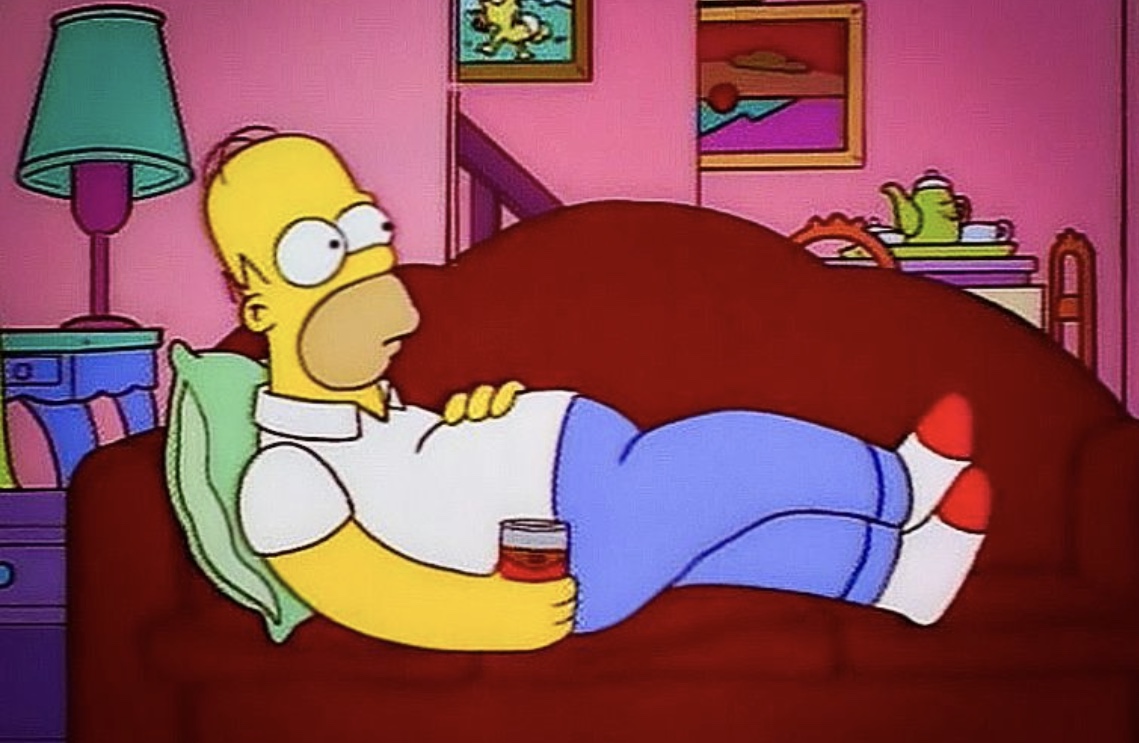
"Kids, you tried, and you failed miserably.  The lesson is, never try." - Homer Simpson (Dan Castellaneta), The Simpsons.


"I'm ‘cool dad,’ that's my 'thang.'  I'm hip.  I surf the web.  I text.  LOL: laugh out loud.  OMG: Oh my god.  WTF: Why the face?" - Phil Dunphy (Ty Burrell), Modern Family.


“The lesson I want you to learn is: it doesn't matter what you look like, tall or short or fat or thin ugly or handsome, like your father.  You could be black or yellow or white. It doesn't matter.  What does matter is the size of your heart and the strength of your character.” - Herman Munster (Fred Gwynn), The Munsters


So, to the Dads in our lives, thank you for the guidance, the laughs, and the love you've given to us.  Like a good TV rerun, it stays with us forever.


Happy Father's Day!


Source: You Tube


Wednesday, June 9, 2021

Laughs from the Past: A Trio of Movie Comedy Anniversaries


Left to right: Mel Brooks in Silent Movie
Matthew Broderick in Ferris Bueller's Day Off and
Bill Murray in Stripes.


By Michael Lyons


There was a time when comedies were big summer blockbusters, standing alongside superheroes and sequels as a fellow box-office success.


Somehow, through industry shifts and changing audience tastes, that's no longer the case, and comedy movies now seem to be relegated  more and more directedly to streaming services and living in a world of diminishing box-office returns.


However, there were summers past when this wasn't the case, and there were three comedies that ruled at the box office.  They've all gone on to become embraced by successive generations, with iconic lines of dialogue and scenes that live hilariously in our memory.


They also all celebrate anniversaries this month, so there's no better time to look back and celebrate...


Ferris Bueller's Day Off (Released June 11, 1986) - 35th Anniversary


When it comes to John Hughes' 80s movies, many believe that they don’t get more “John Hughes” or more “80s” than this.


Matthew Broderick is perfect as the title character, a likable, smooth-talking high schooler who has a lock on “most popular” at his school.


Deciding that he needs a day off, he pretends he is sick and conns his best friend, Cameron (Alan Ruck, hysterical and pitiful), and girlfriend Sloane (luminous Mia Sara) to play hookey and venture off to Chicago for the day.


Out to expose his ruse is his distrusting sister Jeannie (Jennifer Grey, doing the funniest slow burn) and Principal Rooney (Jeffrey Jones), Ferris’ arch enemy.


What follows in the film is scene after scene that are immensely quotable and always funny, no matter how many times you’ve seen them:


“NINE times!”

“Hey, Battah!  Battah!  Battah!”

“Abe Froman, the Sausage King of Chicago”

...the list goes on and on.


Thanks to Hughes's style, Ferris Bueller’s Day Off worked so well and endured for over three decades.  Unique, stunning camerawork and fourth wall breaking make this Day Off seem even grander.


And underneath it all is a message that rings true, whether you’re an 80s teenager or a middle-ager in 2021.  As Ferris says: “Life moves pretty fast, if you don’t stop and look around once in a while, you could miss it.”


Stripes (Released June 26, 1981)- 40th Anniversary 


If you’re looking for Bill Murray at his smirking, smart-aleck best, look no further.


Murray plays John Winger, who feels that his life is going nowhere and decides to enlist in the Army.  He even convinces his best friend, played by Harold Ramos, to join him.


Not only does Murray clash with his drill sergeant, Hulka (Warren Oats, perfectly playing the surly straight man), he and Ramis get a plum assignment, where they wind up rescuing their entire squad when they are caught behind Communist lines.


Directed by Ivan Reitman, Stripes, in many ways, seems like a “warm-up” for his team up with Murray and Ramis in Ghostbusters three years later, in how it combines comedy with another genre.


Murray truly takes the reigns here in the lead.  His singing of “Do Wah Diddy Diddy” while marching is still inspired after all these years.  Additionally, Ramis and Oats, along with John Candy and John Larroquette, all provide solid supporting roles, each having their moment in the film.


It’s been forty years since Stripes debuted.  Is it still as funny as it was four decades ago?  As Murray himself simply declares: “That’s the fact, Jack!”


Silent Movie (Released June 16, 1976) - 45th Anniversary


After the success of Blazing Saddles and Young Frankenstein (both 1974) and eleven years before his beloved Spaceballs (1987), Mel Brooks dared to make a silent film comedy, fifty years after the golden age of the silent film era.


And, it indeed was silent!  There is only a music soundtrack, and when the actors speak, their dialogue appears on title cards (just as they did in the actual age of the silent films).  Silent Movie is daring, original, and a heck of a lot of fun.


Brooks (who co-wrote and directed) stars as Mel Funn, a once-great movie director and now a recovering alcoholic, looking for his comeback.  He decides to make a silent movie and, with his partners (Marty Feldman and Dom DeLuise), pitches the idea to the chief of Big Picture Studios (Sid Caesar), who agrees, but only if Funn can get the biggest names in Hollywood.


The trio searches for celebrities and tries to convince Paul Newman, Burt Reynolds, Liza Minnelli, James Cann, and Anne Bancroft (Brooks’ real-life wife), all of whom have cameos in the film, to be part of their movie.  There’s also mime Marcel Marceau who, humorously has the one line of spoken dialogue in the movie.  When Brooks asks him to be in the silent movie, he answers, “No!”


With a beautiful, upbeat score by Brooks’ usual collaborator, composer John Morris, Silent Movie is wall-to-wall sight gags and jokes from beginning to end.  All of them with the typical Mel Brooks touch:


The studio is being taken over by the corporation “Engulf and Devour.”

An EKG turns into a video game and almost causes a patient his life.

Mel and his sidekicks turn up in Burt Reynolds’ shower...while he’s taking a shower.

Paul Newman and Mel race in wheelchairs.

And a scene where a merry-go-round horse relieves itself is so creatively funny!


Not all of the jokes have aged well and a recurring gag, once considered “funny,” now comes off as insensitive.


Still, while not often discussed in many conversations about Brooks’ films, Silent Movie definitely should be part of the conversation.


It just wants to be fun.  It just wants to be funny.  It succeeds at both!


All of these movies succeed at both.  It’s no wonder that each was a comedy blockbuster.


Tuesday, May 25, 2021

Cruella’s Animated Life: Remembering Legendary Disney Artist Marc Davis


Left: Marc Davis 
Right: his animated creation, Cruella de Vil in 101 Dalmatians (1961)


By Michael Lyons


When describing Cruella de Vil, author and animation historian John Canemaker once said, “You don’t like her as a person, although you love her as a character.”


So fitting for what many consider to be the greatest baddie to emerge from Disney’s long-line of villains. She first burst onto the screen with her echoing cackle and sickly, green cigarette smoke in Disney’s classic 1961 animated feature 101 Dalmatians


Cruella has had an indelible impact on audiences for 60 years.  She was brought back to the screen twenty-five years ago by Glenn Close in the live-action remake of 101 Dalmatians and will once again return this week in the live-action origin story/prequel, Cruella (debuting May 28 in theaters and on Disney+).  In this latest iteration, she is portrayed by Emma Stone.


Top: Glenn Close as Cruella in 1996's 101 Dalmatians and
Below: Emma Stone in this year's Cruella.

With a new generation about to discover Ms. de Vil, it’s the opportune time to introduce (or re-introduce) this generation to the artist responsible for first bringing her to the screen: master animator Marc Davis.


Davis, who sadly passed away in 2000 at the age of 86, had a remarkable career at Disney, contributing to many of the studio’s classic films and theme park attractions. 


A native of California, Marc studied at San Francisco's Otis Art Institute and the California School of Fine Arts.  A friend suggested that Marc apply for a job with Walt Disney's Studio, which he did and was hired in December of 1935.


Marc recalled in a 1998 interview: "During the early days of Disney, the women were all in Ink and Paint.  The men were either in some part of Story or Animation.  It was kind of like a nunnery or a monastery." 


The young artist was put to work on the first full-length animated feature, 1937’s Snow White and the Seven Dwarfs.  Several years after this, while creating early conceptual work for a new film at the studio entitled Bambi (1942), Marc's artwork caught the attention of Walt.  "I did the young animals in the story," remembered Marc," and apparently, he was delighted with my work and said, 'i want to see this guy's drawings on the screen.  Make an animator out of him.'"


This started a career that brought audiences some of Disney's most iconic characters.  Marc animated the title characters in Cinderella (1950) and Alice in Wonderland (1951), which led to him creating some of Disney's most memorable female characters, such as Tinker Belle in Peter Pan (1953) and both Princess Aurora and Maleficent in Sleeping Beauty (1959).


“Well, the hardest thing with Maleficent was how to bring her to life," recalled Marc. “She did stand up and make speeches, but that's when I introduced the Raven this way she could work to the Raven. She also had a wonderful voice, Eleanor Audley, wonderful lady.”


Two of Marc's many Disney animated characters:
Left: Maleficent in Sleeping Beauty (1959)
Right: Tinker Belle in Peter Pan (1953)

After Sleeping Beauty, Marc gave the world Cruella deVil in 1961's 101 Dalmatians.  First introduced in author Dodie Smith’s 1956 novel The One Hundred and One Dalmatians (upon which the movie is based), Marc brought the character to life on screen.  "She's fascinating to watch," said Canemaker of the Cruella.  "She moved in this angular, aggressive way.  She's all over the place, almost like a force of nature."


The film would be Marc's last assignment as an animator, as he transitioned over to another department at Disney, later dubbed Imagineering.  Here, he had a hand in creating "It's a Small World, "Pirates of the Caribbean,” “The Haunted Mansion,” and other Disney theme park attractions now well-known throughout the globe.


Marc retired from Disney in 1978.  He and his wife, Alice, a designer who created the costumes for “Pirates of the Caribbean,” inspired and mentored a new generation of artists at Disney who would go on to develop many of the studio's hit films of the '90s, such as Beauty and the Beast (1991) and The Lion King (1994). 


Inducted as a Disney Legend in 1989, the impact of Marc's work is still felt to this day, evidenced by the fact that one of the greatest characters he brought to the screen headlines one of this summer's most eagerly awaited films, Cruella.


How did he do it?  Marc said simply, "You have to create characters as an artist, but you also have to be able to bring them to life. That's what Walt Disney wanted, and if you pleased Walt Disney, you were bringing things to life."


Sources:


John Canemaker interview with Michael Lyons, June 17, 1998


Marc Davis interview with Michael Lyons, March 27, 1998

Monday, May 17, 2021

The Big Picture: Remembering the Summer Movie Events of the 1990s


A newspaper ad for “Twister” from
Summer 1996

By Michael Lyons


Twenty-five years ago, this month was the start of the Summer Event Season. Oh, sure, some may call it the Summer Movie Season, but back in the 1990s, seemingly every movie that came out during the Summer was an Event.


Consider this: from the beginning of May 1996 through July 4 weekend that same year, Twister, Tom Cruise‘s first Mission Impossible, Disney’s The Hunchback of Notre Dame, and Independence Day all debuted in movie theaters.


Collectively all of those movies made over $2 billion worldwide at the box office.


They are also all examples of how movie studios marketed their films in the 1990s, particularly Summer movies, to be more than movies. They were Events. Going to see a big Summer movie in the 1990s at your local multiplex felt like going to a concert. The barrage of commercials and coverage and advertisements and promotions and fast food toys was nonstop. And on the Monday morning after the big movie opening weekend, if you were the only one at work who hadn’t seen the movie…boy, did you feel left out of the conversation.


Blame it on Batman.


In 1989, Warner Brothers marketed Tim Burton’s Batman, like no other movie had been marketed before. It started with a teaser trailer that began showing in movie theaters in early 1989 and culminated in the movie's opening week, where it was seemingly anywhere you turned.

A “Batman” newspaper ad from summer 1989, touting
The movies massive box-office returns.

Batman’s early, Thursday night screenings contained palpable, electric anticipations in the movie theater.  The entire Summer of 1989 became the Summer of Batman. The film made $411 million worldwide, changing the way movies were marketed and how we went to see movies after that for an entire decade.


Each successive Summer after that during the 1990s came with multiple big Summer Movies...make that big Summer… Events.


Steven Spielberg‘s Jurassic Park in the Summer of 1993 took the Summer Event Movie to the stratosphere, merging the excitement of the promotion that preceded the film with the theme park, thrill ride of the movie itself.

Early screenings, like this for “Jurassic Park”
In June of 1993 only generated even more excitement for the film.
 

So many movies followed the Event marketing formula in so many different ways- the same Summer as Jurassic Park saw Sylvester Stallone‘s Cliffhanger dominating Memorial Day Weekend that year (almost serving as a “warm-up act” for Spielberg’s Dino-blockbuster).  Even Arnold Schwarzenegger’s Last Action Hero (which had the misfortune of opening to disappointing box-office results the weekend after Jurassic Park) was billed as “The Big Ticket for ‘93” in its early movie posters. 

Spielberg produced the live-action Flintstones the following Summer, which became the first Summer movie everyone wanted to see that year.  The Event Model even applied to loftier, more Oscar-worthy Summer films like BraveheartForrest Gump, and Apollo 13.


One of those aforementioned Summer Event movies celebrating its 25th anniversary this year, Twister, was such a big Event that it shifted this Summer Movie release calendar. Premiering over Mother’s Day weekend of 1996, Twister went on to generate $495 million worldwide, causing Hollywood to see the value in releasing Summer movies earlier than Memorial Day Weekend.


Disney became the master at the Summer Movie Events. They literally turned several of their significant animated features made during this decade into Events. The Lion King played at the New Amsterdam Theater in New York City and the El Capitan theater in Los Angeles during a special limited engagement before it opened in theaters everywhere, with a stage show featuring the Disney characters; the following year, Pocahontas premiered in Central Park with 100,000 people going to see it at a free, concert-like experience; twenty-five years ago, The Hunchback of Notre Dame premiered at the Louisiana Superdome.


Disney made sure that audiences knew “The Lion King”
Continued to be a hit throughout the summer of 1994
With newspaper ads like this.

 Summer Event movies would continue through the rest of the decade, culminating in 1999 with Star Wars Episode I-The Phantom Menace release that May, probably the most highly anticipated movie of the entire decade.

“Star Wars- Episode I” made the cover of
Almost every magazine in the summer of ‘99


After this, many studio’s marketing machines, while still in full vigor, cooled to the Summer Movie Event model.  This could have been due to the power of Blockbuster video at the time, or the shortened window from when a film went from theaters to VHS/DVD, or it could be that audiences’ tastes were beginning to change with the end of the decade and the beginning of a new century.

And while we do still see glimmers of the Summer Event Movie (it’s probably safe to say that Marvel Studios has become the true, recent masters of this), the Summers of seemingly one after another after another seems to be now locked away in a time capsule with other 90s relics.

And with the strain of the pandemic and the onset of streaming services taking the last gasp of wind out of the sales of many movie theater chains, will we ever see the return of the Summer Event Movie?

We can hope.  After last year, now just the comfort of returning to a movie theater alone feels like an Event.

It’s a nice thought, however, to think that someday it could come back.  Here’s hoping for a new generation of big movies, shown in crowded theaters, on warm hazy evenings.

Wishing everyone a safe and happy Summer


Friday, May 7, 2021

Parental Guidance Suggested: The 25th Anniversary of Albert Brooks' Comedy, "Mother"


By Michael Lyons

No one combines cynicism and heart better than Albert Brooks.  The comedian has written, directed, and starred in several hilarious films that balance his shrewd perspective on the world with a warmth that slowly builds to the surface throughout the story.

Nowhere is this more on display than in his 1996 comedy Mother, the story of a middle-aged novelist who moves back in with his mom.


This year marks the 25th anniversary of this film (released on December 25, 1996).  With Mother's Day approaching this weekend, there's no better time to celebrate this sharply written and underappreciated comedy.


In Mother, Brooks plays John Henderson, a successful science fiction writer on the verge of his second divorce.  Wondering why he has had such difficulties with relationships in his life, John decides to experiment: he will move back in with his widowed mother, Beatrice (Debbie Reynolds).


Staying in his childhood bedroom, John hopes that the time with Beatrice will strengthen their relationship and allow him to discover more about himself.


Of course, there is discord between the two: Beatrice, in her demure and sweet way, is critical of John, as she "re-discovers" him, now that they're spending so much time together. John is just driven plain crazy by this.


These smaller, slice-of-life scenes are where we find the majority of laughs in Mother.


When Beatrice offers her son sherbet that has passed its expiration date, John informs her: "You're running a food museum here!"  


John and his mother meet up with Beatrice's neighbor in the supermarket.  Beatrice introduces John as a writer but notes: "He hasn't written anything in a while, but he's working on a new book."


"Thanks for the intro, mother," grumbles John.


A scene where Beatrice struggles with her phone's call waiting feature is brilliantly hysterical.


Mother even features a "re-boot" of the iconic Simon and Garfunkle song, "Mrs. Robinson," from The Graduate, here sung by Paul Simon, with new lyrics:  "Here's to you, Mrs. Henderson, your grown son is moving back today..."


Brooks' trademark, observational humor not only sheds light on the everyday things that seemingly pass us by but on the relationships between John and Beatrice.


Debbie Reynolds, starring here in her first acting role in over 40 years, was robbed of an Oscar nomination for Mother.  Walking the tightrope of both adversary and advocate for her son, Reynolds creates a character who is instantly likable and memorable when she's on-screen.  She proves why she's a movie legend and still missed to this day.


Through the laughs and pathos, Mother is a film about why no matter how critical, crazy or imperfect they may seem, we need our family as our support system in our lives.


Happy Mother's Day!


Monday, May 3, 2021

Rebel Reflection: The Stars of “Star Wars” Share Their Memories

By Michael Lyons


“I can still remember sitting in that air-conditioned movie theater in the summer of 1977 and watching the Death Star explode!”

“My Luke Skywalker X-Wing Fighter action figure.  Best birthday present ever!”

“We waited for four days and nights, sleeping outside the movie theater...just to be the first inside to see Episode One!”

“I sat there, totally stressed for two hours hitting refresh on my computer, non-stop.  But, for tickets to see The Force Awakens?  Totally worth it!”

Yes, Star Wars fans have some incredible stories and memories (not to mention devotion).  Ask any, and they will have a personal account of their connection to the immense “Galaxy Far Far Away” that George Lucas created with the original Star Wars that began forty-four years ago and continues with recent entries in the saga like The Mandalorian on Disney+.

But, what’s it like to be part of Star Wars?  In honor of “Star Wars Day” - May the Fourth be with You, after all - what follows are some reflections from the actors and filmmakers who have brought this great Galactic world to us.

“I understood the impact of those movies because I had young children who watched them religiously.  I saw the Star Wars films so often in my house that I ended up knowing all of the other actors’ lines.” - Harrison Ford (Han Solo)

“Your life goes on, and then your life goes on plus Star Wars.  It’s just been an incredible time.” - Daisy Ridley (Rey)

“On set, I would say, ‘Move out of the way, icon coming through.’  C-3PO will out-survive me, all of us.  Now, with electronic media, these images exist forever, and I am very proud about that because I respect him a great deal.” - Anthony Daniels (C3PO)

Star Wars is probably the most influential film of my generation.  That work was the personification of good and evil and the way it opened up the world to space adventure, the way westerns did to our parents’ generations, it left an indelible imprint.  So, but in a way, everything that any of us does is somehow directly or indirectly affected by the experience of seeing those first three films.” - J.J. Abrams (director, The Force Awakens and The Rise of Skywalker)

“I think that Star Wars revolutionized not only sci-fi movies, but also the entire industry in the way that things are done.”  Peter Mayhew (Chewbacca)

“All these years later, I’m really aware of what our films meant to the generation that they were made for, the children of that time.” - Ewan McGregor (Obi-Wan Kenobi in Episodes I-III and an upcoming Disney+ series)

“I am a tremendous Star Wars fan; I know the story means an enormous love to me.  I love the characters.” - Richard Marquand (director, Return of the Jedi)

Star Wars boils down to the transition from adolescence to adulthood.” - Rian Johnson (director, The Last Jedi)

“At the last Celebration, I spoke before an auditorium full of people and I could just feel the affection and the positive feelings that they were exuding.  I was actually moving.  I remember thinking, ‘I’m not worthy,’ because Star Wars is so much bigger than all of us.” - Mark Hamill (Luke Skywalker)

“...I set out to make a film for a generation growing up without fairy tales.” - George Lucas

“People are still asking me if I knew Star Wars was going to be that big of a hit.  Yes, we all knew.  The only one who didn’t know was George.” - Carrie Fisher (Princess Leia)


Whether you saw Star Wars in a theater, on VHS, cable TV, at a multiplex, or on Disney+, the memories will keep coming.

Happy “Star Wars Day” to all!  May the Fourth be with You!


Sources:

Brainyquote.com

Darksideoftheforce.com

Fox Home Video

Inspiringquotes.us