Thursday, September 16, 2021

Alienated: The 35th Anniversary of "ALF"

By Michael Lyons

In the fall of 1986, when ALF debuted, no one knew what to expect about a family sitcom that featured a puppet that was supposed to be an alien from another planet (an "Alien Life Form" - ALF).  But no one could have also expected positive reviews from The New York Times and The Washington Post.


This was probably an early indication of why ALF would become a surprise hit, not just with younger audiences but all demographics, and would go on for another four years.


The show's thirty-fifth anniversary this month provides an ideal opportunity to celebrate ALF, which, for multiple generations, provides comforting nostalgia of an '80's childhood.


The brainchild of puppeteer Paul Fusco, who operated ALF and provided the voice.  He had even used the puppet to pitch the idea for the show to then-NBC President Brandon Tartikoff.


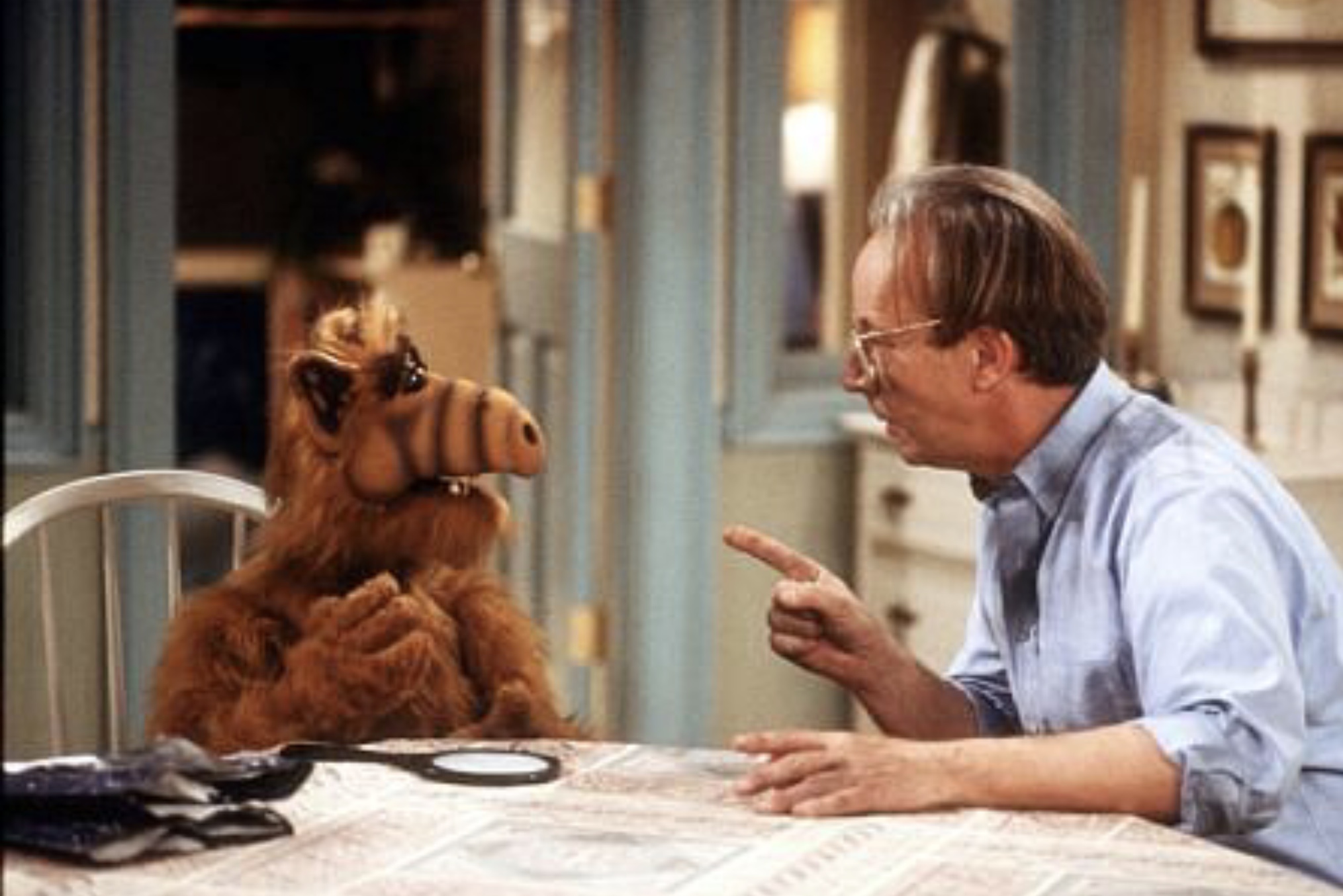
The show's premise is that ALF, whose real name is Gordon Shumway, is a smart-aleck alien from the planet Melmac.  He crashes in the garage of the average American home of the Tanners, led by put-upon Dad (played to exhausted perfection by the underrated Max Wright).  The Tanners take ALF in to keep him hidden from a government agency that may be searching for him.  Meanwhile, ALF attempts to work on his spacecraft, hopes to return home, and learns about the earth.


The premise of an alien studying our planet was nothing new to prime-time TV sitcoms, with shows like My Favorite Martian and Mork & Mindy coming before ALF. Still, the concept does allow for social commentary disguised as harmless comedy.


This is what else was unique about ALF and connected with audiences. The series featured sharp writing that, while going for easy laughs, was also a quick jab that humorously held a mirror up to the world.  "Some people are so blinded by the thirst for money that it causes them to lose their values and do things they shouldn't do," explained Willie in one episode.  To which ALF replies, "Well, that explains Ghostbusters II."


In addition to such sharp one-liners, ALF also tackled such complex topics as nuclear war, alcoholism, consumerism, and family, without ever forgetting it was a comedy.


Debuting on September 22, 1986, on NBC, ALF was a hit, running through March of 1990.  The title character was ubiquitous on merchandise throughout its run.  ALF plush dolls, lunch boxes, and trading cards were just some of the many products.


There were also Saturday morning cartoon spin-offs, ALF: The Animated Series and ALF Tales.  The original show, however, never got its series finale.  The show's last episode, "Consider Me Gone," ended on a cliffhanger, as the creators didn't realize that NBC would cancel the show.  


To provide closure for fans, a made-for-TV movie, Project: ALF, aired in 1996 on ABC to tie up loose ends.


The character also returned for the short-lived ALF's Hit Talk Show, which aired on TV Land in 2004.


For fans of ALF, the original show lives on in fond memories of another time in TV history.  It provided laughs and escape, and while the felt and fur title character was, in no way, a role model, he was still beloved by many viewers who will never forget him.


Or, as ALF himself once said: "If you love something, let it go.  If it comes back to you, it's yours.  if it's run over by a car, you don't want it."


Sources:


FilmFax Magazine, July-September, 2021

IMDb

Wikipedia


Wednesday, September 8, 2021

Film School: Movie Quote Tributes to Teachers

 By Michael Lyons


I still think about my sixth-grade teacher—Mr. Simola, Ralph J. Osgood Elementary School in Kings Park, NY.

I was in his class forty-two years ago.  But, the influence and inspiration he provided are still with me to this day.  That's what teachers do.  They provide life lessons that shape us and remain guideposts, no matter how many years pass by.


As a new school year starts, once again, under extremely challenging conditions for so many, it's good to pause and reflect on the crucial role teachers play in our lives.


And where better to celebrate that than in movies that have celebrated teaching.  What follows are some memorable quotes from and about some remarkable movie teachers:


"In my classroom, poetry is its own reward."

-Teacher Louanne Johnson (Michelle Pfeiffer) in Dangerous Minds (1995).


"Yeah, I've been beaten up, but I'm not beaten.  I'm not beaten and I'm not a quitter."

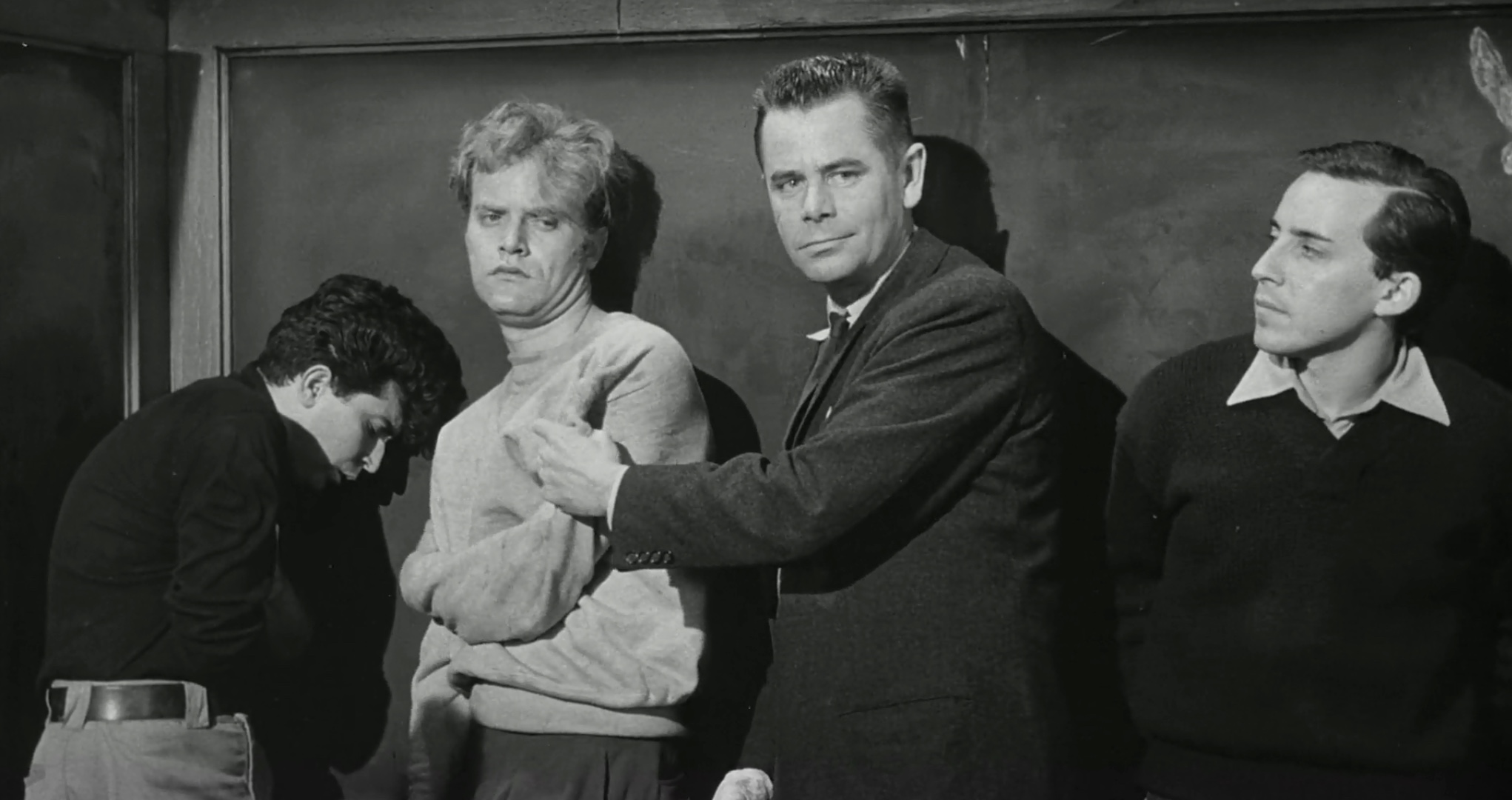
- Teacher Richard Dadier (Glenn Ford) in The Blackboard Jungle (1955).


"It will test your head, and your mind, and your brain, too."

 - Teacher Dewey Finn (Jack Black) in School of Rock (2003).


"I think I'm attracted to teachers.  Yeah, I took out an English teacher.  That didn't work out at all.  I sent her a love letter...she corrected it!"

- Student Thornton Melon (Rodney Dangerfield) in Back to School (1986).


"...I teach truths.  My truths. Yeah, and it's kind of scary dealing with the truth.  Scary and dangerous..."

- Teacher Mark Thackeray (Sidney Poitier) in To Sir with Love (1967).


"And when you write that book of yours, remember that in addition to all those boys you taught, you managed to teach something to at least one headmaster."

 - Headmaster Ralston (Austin Trevor) to Teacher Charles Chipping (Robert Donat) in Goodbye, Mr. Chips (1939).


"Mr. Holland had a profound influence on my life and on a lot of lives I know. But I have a feeling that he considers a great part of his own life misspent. Rumor had it he was always working on this symphony of his. And this was going to make him famous, rich, probably both. But Mr. Holland isn't rich and he isn't famous, at least not outside of our little town. So it might be easy for him to think himself a failure. But he would be wrong, because I think that he's achieved a success far beyond riches and fame. Look around you. There is not a life in this room that you have not touched, and each of us is a better person because of you. We are your symphony Mr. Holland. We are the melodies and the notes of your opus. We are the music of your life."

 - A former student discussing Teacher Glenn Holland (Richard Dreyfuss) in Mr. Holland's Opus (1995)


“... you ask, how do we get the students in on Saturdays for remedial reading? So, I'll tell you how: We’ll go to their homes. We’ll talk to their folks. If their folks can't read - as some of them indeed cannot - then they can come in, too. The only way we're going to get anything done around here is to get everyone involved! That goes for all of you: it's time to get involved!”

 - Principal Joe Clark (Morgan Freeman) to Teachers in Lean on Me (1989).


“We don't read and write poetry because it's cute. We read and write poetry because we are members of the human race. And the human race is filled with passion. And medicine, law, business, engineering, these are noble pursuits and necessary to sustain life. But poetry, beauty, romance, love, these are what we stay alive for.  To quote from Whitman:  ‘Oh me! Oh life!... of the questions of these recurring; of the endless trains of the faithless... of cities filled with a foolish; what good amid these, O me oh life?’ Answer.  That you are here - that life exists, and identity; That the powerful play goes on and you may contribute a verse. That the powerful play goes on and you may contribute a verse. What will your verse be?”


-Teacher John Keating (Robin Williams) in Dead Poets Society (1989)


And so, to all the "Mr. Simolas" out there - the teachers making lives better, as we start this new school year - here is one more quote:

"Thank you!"


Sources:

IMDb


Wednesday, August 25, 2021

"Summer Days Drifting Away": Movies That Capture That End of Summer Feeling

 By Michael Lyons

 Wasn't it just Memorial Day?  Now, we find ourselves bringing our pumpkin spice coffee to the beach, which can only mean one thing: summer is coming to an end.

And although this summer was, once again, filled with the challenges of the world that made it less than perfect, it is still somewhat sad to watch the carefree days of poolside bar-b-ques (even socially distanced ones) fade away for another year.

There's an indefinable sense of sadness that comes with summer's end, and there have been several movies that have perfectly captured this.


Stand By Me (1986)

A classic. Director Rob Reiner's adaptation of the Stephen King novella, The Body, tells the story of four adolescent friends (Wil Wheaton, River Phoenix, Corey Feldman, and Jerry O'Connell, all turning in stunning performances), who go on a camping trip in the woods to try and find the body of a missing boy.

Celebrating 35 years this summer, Stand By Me becomes even more beloved and poignant as time goes by, with its powerful themes of friendship, facing one's mortality, and making the most of life.

Taking place over Labor Day weekend, 1959, the film also perfectly captures the sense of melancholy that comes (particularly in childhood) with the end of summer


Dirty Dancing (1987)

Yes, this iconic film, starring Jennifer Grey and Patrick Swayze, as, respectively, a young guest who falls in love with a dance instructor at a resort in the Catskills, NY, mainly occurs during the peak days of summer of 1963.

But, the film's finale, an end-of-season talent show, captures the vitality and innocence of a generation about to be thrust headfirst into turbulent times (as November of '63 would see the assassination of President Kennedy) and sets all of this against the backdrop of summer's swan song.


American Grafitti (1973)

George Lucas's film not only launched his career but it has also become a part of Americana, as it set the standard for nostalgic, coming of age stories.

It's the last day of summer vacation, 1962, for a group of high school graduates in California who are about to set off on different paths in life.  With an all-star cast that includes Ron Howard, Richard Dreyfuss, Cindy Williams, Harrison Ford, Charles Martin Smith, Candy Clark, and Suzanne Somers, among many, American Grafitti captures the feeling of an end-of-innocence, with a fantastic doo-wop soundtrack.


Labor Day (2013) 

An escaped convict (Josh Brolin) takes a mother (Kate Winslet) and her son (Gattlin Griffith) hostage in their home over Labor Day Weekend, 1987 in writer/director Jason Reitman's drama, which is slowly (as times sleepily) paced, but noteworthy for its end of summer backdrop.


Die Hard with a Vengeance (1995)

Yes, the third Bruce Willis/John McClane action powerhouse (co-starring Samuel L. Jackson) was a summer blockbuster. Still, the film’s setting in New York City, during a September heatwave, provides a nice, unique setting (notice the "Back to School" signs during the film's explosive opening).


Weekend at Bernie's (1989)

Two insurance company employees (Andrew McCarthy and Jonathan Silverman) are invited to the Hamptons' home of their boss, Bernie (Terry Kiser), only to discover that he's been killed...and wind up dragging the body around to convince others he's still alive.

This cult comedy has gained notoriety and popularity through the years, primarily for its dark, can't believe-your-laughing-at-it moments.  And, the weekend that this all takes place at Bernie's?  That's right, Labor Day Weekend!  Just like Bernie himself, some just don't want to let summer die.


Picnic (1955)

William Holden is a down-on-his-luck drifter who comes to a small town in Kansas over Labor Day Weekend, falling in love with one of the most popular girls in town (Kim Novak) and unsettling the lives of a number of the other residents.

The film, set in 24 hours, features beautiful scenes of the town's Labor Day picnic, including a fun beauty pageant ritual that looks ahead to Halloween and fall.

Directed by Joshua Logan, who had also helmed the Pulitzer Prize-winning play on which the film is based, Picnic is a perfect example of classic Hollywood filmmaking and a glimpse into the comforting American summers of another era.


And so, now we pack away the lawn chairs and get ready to rake the leaves.  But before we do, a festival of one or all of these films would be the ideal (and eclectic) way to bid farewell to those "lazy, hazy, crazy days of summer."


Friday, August 13, 2021

Moonstruck: The 40th Anniversary of "An American Werewolf in London"


By Michael Lyons


Hollywood didn't know what to make of An American Werewolf in London.  Writer-director John Landis penned the script in 1969 and held on to it.  He then had box-office success with National Lampoon's Animal House (1978) and The Blues Brothers (1980) and finally unearthed his Werewolf, hoping to get it made.


It was a tough sell.   Many in the industry felt that the script had too much comedy to be a horror film and too much horror to be a comedy.  Luckily it was eventually given the green light and has become a favorite of many, who appreciate the fact that it's a comedic horror film and a horrific comedy.


An American Werewolf in London is very funny...it's also terrifying...and it's also unlike any other film.  Released forty years ago this month, its appreciation as a groundbreaking movie in several genres has only grown through the years.


The film tells the story of two young, college-age Americans, David (David Naughton) and Jack (Griffin Dunne), backpacking in England.  They cross the barren moors and stop into a local pub, "The Slaughtered Lamb," seeking shelter from a rainstorm.


Here, they meet the suspicious, hostile townspeople, who cautiously warn the two to stay on the road.  When David and Jack leave, they wander onto the moors and are attacked by a giant wolf.


Yes, as it turns out, it was a werewolf, and David was bitten.  As he recovers in London, grappling with what has happened, he slowly finds that he is transforming into a werewolf himself, soon terrifying the citizens of London.


Landis takes what seems like a basic horror movie script and adds some unexpected elements.  The biggest of these is the humor.  A scene in which David wakes up naked in the zoo after his first transformation plays out with great slapstick comedy, as he attempts to cover up with balloons to get home.


An American Werewolf in London is also full of darker humor, particularly when David continually receives visits from the undead ("Have you ever talked to a corpse?  it's boring!").


Coupled with this are some truly scary, jolt-out-of-your-seat moments, especially a dream sequence, in which David envisions his entire family under attack by hideous, nightmarish creatures.


There's also a very contemporary tone that makes An American Werewolf in London something unique.  This is true, not just in how it melds two genres together, but also in how it uses music, such as "Blue Moon" by Bobby Vinton, "Moondance" by Van Morrison, and "Bad Moon Rising" by Creedence Clearwater Revival.


The last song is played over the soundtrack just before David transforms into a werewolf, a scene that would become a flashpoint for make-up effects in movies.  Designed by the legendary Rick Baker, the creature effects in An American Werewolf in London are still astonishing.  Long before computer-generated imagery, Baker used traditional make-up, costumes, animatronics, and puppets in startling, tactile, and terrifying scenes.


Baker rightly won the first Academy Award for Best Make-Up for his work on An American Werewolf in London (he would win the award a record seven times).


Released on August 21, 1981, An American Werewolf in London was a modest success, earning $62 million worldwide at the box office. Critics were lukewarm in their reviews. 


Now celebrating its 40th anniversary, it's been in the four decades since that appreciation for the film has grown.  By 1997, there was a sequel, An American Werewolf in Paris (with a different director and cast), which didn't fare well but showed audiences were eager for more of the story.


The film also influenced a generation of filmmakers, including Edgar Wright, who created Shaun of the Dead.


Although many were unsure of what to make of An American Werewolf in London before, during, and after its production, like so many movies, it was seemingly ahead of its time in its ability to deliver on so many levels.  


You could say that An American Werewolf in London was a... transformational...experience.


Sources:

IMDb

Wikipedia


Friday, August 6, 2021

Oddly Heroic: Film's Forgotten Offbeat Superheroes

 By Michael Lyons

A crazed psychiatrist, a mercenary armed with high-tech weapons, a thief who wields boomerangs, a half-man/half-shark...


...and these are the good guys!


The superhero stars of writer-director James Gunn's movie, The Suicide Squad, debuting this weekend in theaters and on HBO Max, is not what immediately springs to mind when one thinks of cape-wearing, "do-gooding," battling evil superhero.


Based on the DC Comic of the same name (which had been adapted once before in 2016) The Suicide Squad centers on a group of inmates the government recruits to save the world and soon become the strangest anti-heroes ever seen.


The Suicide Squad also continues a long-standing trend of movies about unlikely superheroes.  Many of these films have slipped between the cracks of our pop-culture consciousness...until now.


What follows is just some of these seldom-seen strange, "super" stars.


Condorman (1981)


A comic book artist (played by Michael Crawford - yes, the Michael Crawford, who would later star as The Phantom of the Opera on Broadway) finds himself dressing up and becoming the superhero he has created for his comic books.


Released by Disney, this superhero tribute/send-up was a critical and box-office disappointment that's gained more notoriety through the years as a forgotten footnote of a curiosity in the studio's timeline.


Mystery Men (1999)


Based on a series of comics, this film centered on "B" list superheroes, with somewhat limited powers, such as Mr. Furious, who uses his rage, the Blue Raja, who wields cutlery, The Bowler, known for tossing her bowling ball at criminals and The Shoveler, who...well..shovels.


With a staggering, all-star cast that includes Ben Stiller, Hank Azaria, William H. Macy, Janeane Garofalo, Paul Reubens, and Geoffrey Rush, Mystery Men is very offbeat, walking a delicate line between parody and tribute.


The Meteor Man (1993)


 Writer, director, and star Robert Townsend brought us this genial comedy about a schoolteacher (Townsend) who finds himself imbued with powers after being struck by a meteor.  Donning a super-suit, he becomes the titular hero, saving his community from a drug lord.


Like all of Townsend's work, The Meteor Man is filled with heart, humor, and a nice message about sharing one's strengths with others.


Hero at Large (1980)


In his first starring film role, John Ritter, during the height of his Three's Company fame, plays a struggling actor in New York City, who inadvertently thwarts a robbery while wearing a "Captain Avenger" costume for a film's promotion.


He becomes a real-life hero for the city but soon learns lessons about the price of fame, particularly when you aren't true to yourself or others.


The posters for Hero at Large declared: "Help is on the way!"  True of all of these characters.  Like The Suicide Squad, however, they may not be the help we want, but they're the help we've got...and they'll do their best to be super!


Friday, July 30, 2021

Game Changers: The Olympics Get Animated!

By Michael Lyons


Like all else in the world, this summer's Olympics are much different than they've been in the past.


However, one thing is the same, and that is the Olympic spirit is much needed right now.


As we celebrate the games this summer, it's fun to look back at how the Olympics have also been celebrated through the years in, of all places, cartoons.  Here, through exaggerated exploits, some anthropomorphic athletes have gone for the gold.


Laff-A-Lympics (1977)


Originally airing on ABC, as part of the two-hour Saturday morning show, Scooby's All-Star Laff-A-Lympics, this Hanna-Barbera series brought together almost every one of the studio's characters created up to that point in a shared universe, where they all competed in Olympic-style games.


The teams were the "Yogi Yahooeys," comprised of classic Hanna-Barbera characters, such as Yogi Bear, Boo-Boo, Huckleberry Hound, Quick Draw McGraw, and Wally Gator, just to name a few; the "Scoobie Doobies" were comprised of (then) newer HB stars such as Scooby-Doo, Shaggy, Dynomutt and Captain Caveman; and then there were the villainous "Really Rottens," led by Mumbley (who had been a "good guy" detective in an earlier series, but let's not try to unravel "HB logic") and included a number of the studio's most infamous characters such as the Dread Baron, the Great Fondoo and Daisy Mayhem. 


Snagglepuss and Mildew Wolf would serve as the announcers for each episode, which would have very similar plots: the teams would travel the world, compete in various sporting events, and the Really Rottens would attempt to win by cheating.


Amidst the messages of sportsman-like conduct and the downfalls of not playing by the rules, the true Saturday morning magic of this show for a generation of kids was in watching so many comforting, familiar cartoon faces in the same space competing against each other.


Hong Kong Phooey pitching to Quick Draw McGraw in a baseball game or the Blue Falcon uncovering the Really Rottens’ cheating during a pole vaulting event is, to many animation fans, as amazing as an opening ceremony.


Animalympics (1980)


This seldom-seen animated feature is unique in so many ways.  It shows the "broadcast" of the Olympic Games (both summer and winter) in the animal world, with very creative touches.  A dragon lights the torch; a gazelle and cheetah compete in track and field; whales, squid, and manta rays take part in the swim meet, and a minx takes on gymnastics.  All of this is broadcast on the "ZOO" network.


The animation in Animalympics is fuller than other television animation from the time, and the character designs of the anthropomorphic animals are so much fun to watch.  Coupled with this is a sharply written script that satires everything from politics to broadcast journalism.


This comes as no surprise when one learns of the talent involved with Animalympics.   Voices are provided by Harry Shearer (before his Simpsons days), Gilda Radner (during the height of her SNL popularity), and Billy Crystal (as his star was beginning to ascend thanks to the TV sitcom Soap).


Additionally, at the helm of directing was Steve Lisberger, who would bring the world Tron just two years later.  Animators who worked on the film were also talents about to rise, among them Roger Allers (who would co-direct The Lion King) and Brad Bird (The Incredibles).


Unfortunately, Animalympics never received the audience it deserved.  It was to be produced as a two-part special for NBC.  The first part, the Winter Games, aired in early 1980, but when the United States decided to boycott the Summer Olympics in Moscow that year, NBC canceled their TV coverage, and the second part (the Summer Games) of Animalympics.


The two specials were paired together as a feature film but never really received a significant release.  Forty-one years later, Animalympics deserves a revisit, especially during this Olympic summer.


The Olympic Champ (1942)


Goofy has shown audiences his athletic side quite a bit in his series of pseudo "how-to" films, like The Art of Skiing (1941), How to Fish (1942), and Hockey Homicide (1945), why not add the Olympics to that?


In this classic Disney short subject, Goofy takes on several aspects of the Olympic games, from carrying the torch (which burns down to a small crisp) to track and field (which results in a hysterical, domino effect of collapsed hurdles he has attempted to jump).


Directing The Olympic Champ is the legendary Jack Kinney, who directed 39 similar Goofy cartoons, where the main character demonstrates his "expertise" on a subject.  Kinney's skill was how to create cartoon acrobatics that seemed to go on forever (here, Goofy winds up being pursued by the pole he is using for pole vaulting!).


Adding to the fun is narrator John McLeish, who provided commentary in a very strait-laced style, which humorously offsets the disasters happening on screen.


The Olympic Champ, like Animalyimpics and Laff-A-Lympics, amid their surrealistic silliness, are all also celebrations of the Olympic games and all they represent in terms of competition, perseverance, sportsmanship, teamwork, inspiration, and collaboration.  


Here's to the Olympic Games!


Friday, July 16, 2021

It's Showtime!: The Movies go to the Movies


By Michael Lyons


Last weekend was a very hopeful weekend for movie theaters.  The release of Marvel's Black Widow, which, like so many movies, had its release date delayed by over a year due to the COVID-19 Pandemic, made $80 million at the box office.


This was a record domestic opening for the Pandemic-era, breaking a record set just a few weeks prior by F9, the latest film in the Fast & Furious franchise.  Additionally, A Quiet Place II has been doing more than respectable business.


Sure, a "chunk" of Black Widow's earnings came from its availability on the Disney+ streaming service, but box-office numbers that haven't been seen in well over a year signal a hopeful sign that moviegoers are coming back to theaters. 


Any film fan will admit that as comfy as our couches are, nothing replaces the communal experience of watching a movie in a theater with others, sharing in laughs, gasps, and applause. At the same time, the comforting smell of popcorn wafts through the air.


Filmmakers know this too well.  Through the years, many films have celebrated the experience of going to the movie theater.  We continue to cross our fingers and revel in the hope that Black Widow and other recent releases have given us: that movie theaters are on a long-awaited upswing.  Let's take this time to look back at some movies that have celebrated going to the movies.


La La Land (2016)


Writer/director Damien Chazelle's musical love letter to movie musicals and the city of Los Angeles itself features a sequence in which the film's two stars (Ryan Gosling and Emma Stone) attend a screening of 1955's Rebel Without a Cause.  The scene, although brief, speaks beautifully to the romance of a darkened movie theater.


Scream 2 (1997)


A scene in a horror movie taking place in a movie theater showing a horror movie is "meta" before the word was a big part of our movie lexicon.  In this sequel to their blockbuster original, writer Kevin Williamson and director Wes Craven celebrate the collective fear found in theaters showing a scary movie.


Matinee (1993)


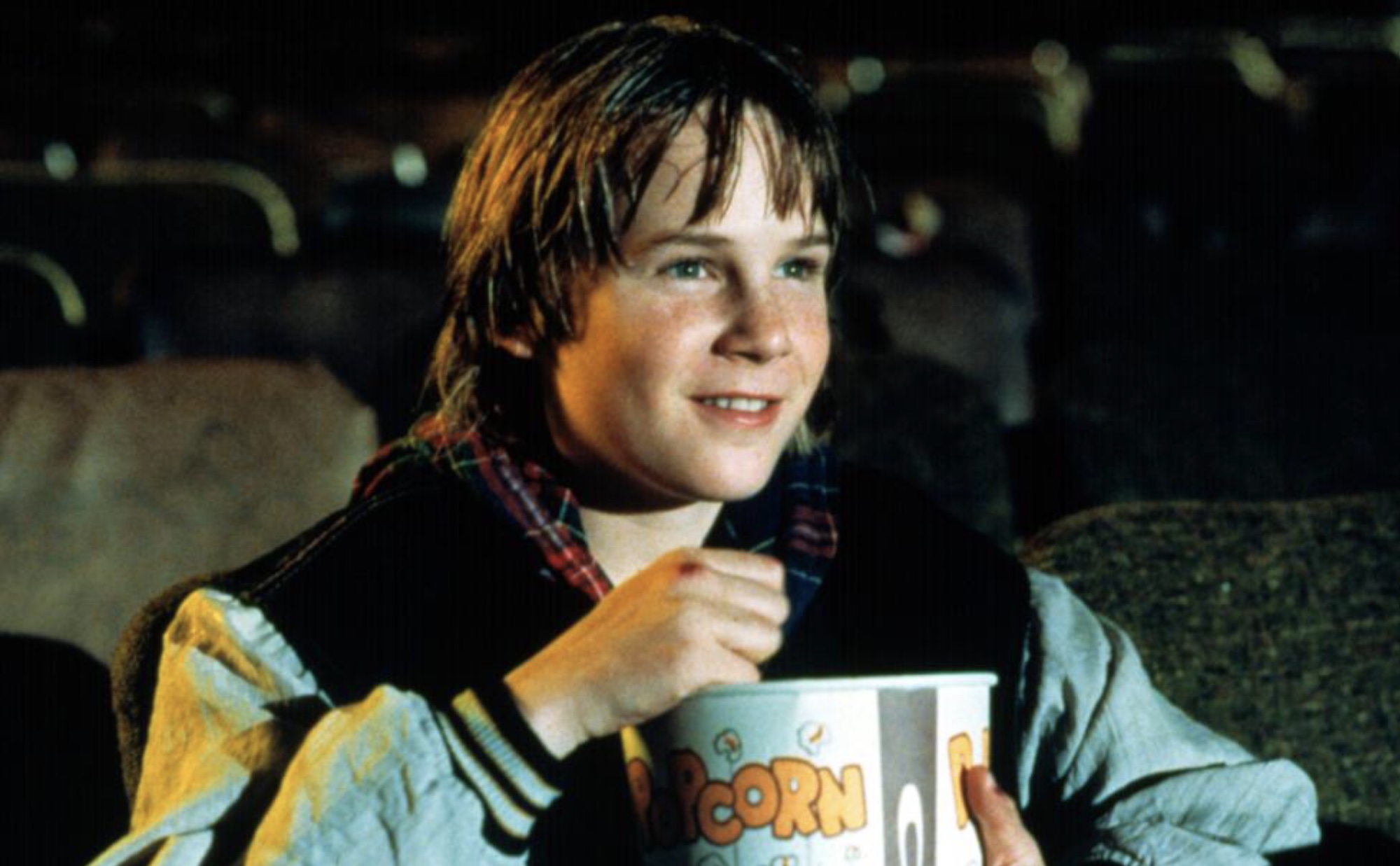
Another era of moviegoing is at the center of this underrated movie from Gremlins' director Joe Dante.  Matinee is about the "Golden Age" of gimmicky "B" movies and the fun that went along with seeing them in a theater.


Last Action Hero (1993)


One of the most beloved bombs Hollywood has ever made.  Say what you want about this Arnold Schwarzenegger behemoth; it perfectly captures the feeling of going to see one of Hollywood's event movies released during the multiplex era.


Cinema Paradiso (1988)


A young boy in a small Italian town becomes enchanted with film by spending his free time in the titular neighborhood movie theater.  Writer/director, Giuseppe Tornatore's film, won the Oscar for Best Foreign Language Film, and it's easy to see why.  This is a beautiful movie with a scene in a movie theater at the conclusion that's one of the most heartbreaking and touching moments in film history.


Radio Days (1987)


Woody Allen's story of a family in Rockaway, New York, during World War II features a lovely scene filmed at the iconic "Showplace of the Nation," the beautiful one-time movie palace, Radio City Music Hall, in all of its art deco glory.


The Purple Rose of Cairo (1985)


Another Woody Allen gem, this time fantasy about a character who – literally- steps off the screen into a movie theater.  Beautiful, funny, thought-provoking, and sad, The Purple Rose of Cairo speaks directly to dreamers who sit wide-eyed in a darkened movie theater.


The Muppet Movie (1979)


The Muppets' first film is bookended with scenes of Kermit and company watching the movie in a theater (there's also a funny theater moment in the middle of the film).  Sure, they're all in a screening room, technically and not in a movie theater, but the Muppets watching The Muppet Movie this way is a magical conceit that makes a film lover just a little dizzy. 


Grease (1978)


"Stranded at the drive-in..." sings John Travolta as Danny Zucko in this blockbuster movie musical, as the song "Sandy" begins.  It's just part of a scene in which he and co-stars Olivia Newton-John, Stockard Channing, Jeff Conaway, and director Randall Kleiser bring back to life the magical era of watching movies through car windshields in drive-ins.  


Due to necessity over the past year, the drive-in resurfaced, one of the few cheerful bright lights to come out of 2020.


Blazing Saddles (1974)


Toward the end of Mel Brooks' comedy masterpiece, there is a scene at another iconic movie palace, Grauman's Chinese Theater (now the TCL Chinese Theater) in Hollywood. It’s here that the film's villain, Hedley Lamarr (Harvey Korman), goes to see Blazing Saddles in the theater.  He then has a showdown with the movie's hero, Bart (Cleavon Little), out in front of the theater, among all the famous footprints in cement.


Singin' in the Rain (1952)


Arguably the most outstanding movie musical ever made, which tells the story of the advent of sound in film.  The "movie within the movie," The Dueling Cavalier, is screened for an audience in a movie theater with disastrous results for the filmmakers and hysterical laughs for the audience.


Sullivan's Travels (1951)


Writer/Director Preston Sturges' brilliant comedy follows a famous Hollywood director (Joel McCrea), who decides to live life as a tramp to gain real-world experiences for his upcoming film.  Toward the end of the film, through a series of misadventures, he winds up with a prison chain gang.  One night, the Disney cartoon Playful Pluto is screened for the prisoners, and Sullivan finds himself laughing along with them.  A realization for the filmmaker of the joy and escape that going to see a movie with others in a theater provides to so many.


All these movies (and so many others not mentioned here) do the same.  They all reflect that magic found in a movie theater as the lights dim and the show begins.


Here's hoping for more of these magic days in our near future.