Sunday, April 14, 2019

Holy Roller: The 60th Anniversary of “Ben Hur”


By Michael Lyons

“The Entertainment Experience of a Lifetime!”  This promotional tag line from the original movie poster for “Ben Hur” is not only a clever play on words, it truly sums up the film.

At a time in Hollywood history when films became events; when movie studios battled television by creating epic films; when these films were three plus hours in length, came with an intermission and a program; when a night at the movie theater with an oversized screen felt like a night at a Broadway theater; and when studios turned to the Bible for inspiration, few films were more epic, more Biblical and more of an out-and-out moviegoing experience than “Ben Hur!”

A movie regular around the Easter season, coupled with the fact that this year marks the 60th anniversary of “Ben Hur,”makes this the perfect time to celebrate this most classic film.

Based on the 1880 novel, “Ben Hur: A Tale of the Christ” by General Lew Wallace, the story was actually first adapted as a silent film in 1925.

Set in Jerusalem in AD 26, the film tells the story of a wealthy Jewish Prince, Judah Ben-Hur (Charlton Heston), a kind, generous nobleman who lives a life of privilege, until he and his family are betrayed by a family friend Messala (Stephen Boyd).  Messala has grown up to be a Roman Tribune and wrongfully accuses Judah Ben-Hur of attacking the Roman army as they march by.

Ben-Hur is sentenced to a life of slavery, his sister and mother sent to prison.  While enslaved and shackled, marching through the desert, a stranger takes pity on Ben-Hur, offering him water.  The stranger is Jesus Christ, who also provides Ben-Hur with hope and a will to live.

While a slave in the galley of a ship, Ben-Hur saves the life of a Roman Consul Quintus Arrius (Jack Hawkins).  To repay this, Quintus adopts Ben-Hur, bringing him back to civilization and, once again, a life of privilege, where he becomes one of Rome’s greatest charioteers.

Through all of this, Ben-Hur searches for his mother and sister, only to find them lepers who have been banished to a leper colony.  Filled with hate and despair, Ben-Hur and his family find themselves back in Jerusalem and witness to the trial and crucifixion of Jesus.

The experience changes and transforms Ben-Hur, losing the anger that filled his heart, filling him with peace, as he lets go of his past and looks ahead to life anew.

“Ben-Hur” was directed by veteran William Wyler (“The Best Years of Our Lives” and “Mrs. Miniver”) in a style that gives new meaning to the term “cinematic beauty.”   The expanse and magnitude of some of the scenes in this epic film are still breathtaking after all of these years.

Standouts are the sea battle with galleys full of oarsman trapped in the bowels of the boats and the emotional trial of Jesus with its endless mass of extras as he is marched through the streets.

Most memorable by far, however, has got to be the now famous chariot race, in which Ben-Hur faces off against Messala.  Without a doubt, one of film’s greatest action set pieces.  Unfurling in real time, the danger and energy of the scene is palpable.  No mystery that it’s still studied by film students and scholars to this day.

The chariot race sequence, along with the entire film, must have been nothing short of staggering for 1959 audiences to see on the big screen (literally).  “Ben Hur” was a box-office hit that snagged deserved Oscars for Best Picture, Director and Actor, after its initial release on November 18, 1959.

A genre that has faded in time and a film that fits squarely in the “They just don’t make ‘em like this anymore,” “Ben Hur” continues to endure.

What’s allowed this is its strong subject matter and message.  Ben-Hur (whose life experience of being sent to his death and essentially being “resurrected,” mirrors that of Christ himself) learns that faith and forgiveness are powerful allies that can truly save our lives.

More powerful that any epic scale or action-packed chariot race, that’s what makes “Ben-Hur” the “Entertainment Event of a Lifetime.”

Wishing you and yours a very Happy Easter!

Sources: 
IMDb 

Wikipedia

Saturday, April 6, 2019

Lightning’s First Strike: Remembering Filmation’s “Shazam!”


By Michael Lyons

Believe it or not, there was a time, only four decades ago,  when super heroes were not the subject of big-budget movies blockbusters.

Nope, back then, they were fodder for low-budget Saturday Morning TV Shows.

Heavy hitters like Batman and Spider-Man were relegated to minimally animated shows that were consumed by young viewers, as quickly as they consumed overly sweetened cereal.

This weekend’s latest entry in the movie box-office race from DC, “Shazam!” Is no different and was once a part of the CBS Saturday Morning line-up from 1974 through 1976.

Starting life of course as a comic book in 1939, “Shazam!” Was adapted for TV by Filmation Studios, the folks responsible for “Archie” and “Fat Albert.”

“Shazam!”  Was somewhat unique for the animation studio Filmation, in that it was primarily a live-action show, with some animation added for effects.

As in the comic (and the new movie), the TV Show told of the adventures of young Billy Batson (Michael Gray) who had the power to change into the superhero Captain Marvel (played first by Jackson Bostwick and then John Davey in later seasons).

Billy travels the world in a 1973 Dodge Motorhome (don’t ask, no reason is ever given), with his mentor, whose name is actually Mentor (played by veteran actor Les Tremayne).  Together, they look to fight injustices and help those innocents who can’t help themselves.  

“Shazam!” the show is interesting for a number of reasons.  It’s one of the few instances outside of the early comic books, in which the character is referred to as Captain Marvel (the name eventually ceased being associated with “Shazam” after legal entanglements with Marvel Comics).

Also, Captain Marvel never battles a super villain, but instead each episode is about helping out a young person who has “gone astray,” maybe falling in with the “wrong crowd” or possibly even (gasp) cheating on a school exam.

With this, “Shazam!” Has a moral attached to each episode.  A prime example of safe, watered down Saturday Morning TV that was so prevelant in the ‘70’s.

And speaking of the ‘70’s, this is one kid’s show that’s a true time capsule of the disco decade: from the cars, to the clothes to the California setting, it’s all just so, so...well...so ‘70’s.

Add to that very limited animation of the Council of Elders who advise Billy and some threadbare special effects and Filmation’s “Shazam!” Takes on an innocent charm that brings an immediate smile to the face.

So, as 2019’s “Shazam!”  Conquers the box office this weekend, remember that there were once humble beginnings when the superhero fought crime not with a mammoth budget, but with a motorhome!

Sources:

Wikipedia

Friday, March 29, 2019

Kind of a Big Wheel: The 50th Anniversary of Disney’s “The Love Bug”


By Michael Lyons

The years following Walt Disney’s death in 1966 were some of the most challenging for the Studio that he had started.  Most of the films produced during this time were somewhat by-the-numbers family fare.

Most of these films starred actor Dean Jones, most of them featured slapstick humor and most of them concluded with a car chase.  One of these films that fits in this mold managed to not only stand out, but became one of the biggest box-office hits in the “post-Walt” years.

The movie was “The Love Bug,” the story of a Volkswagen Beetle car named Herbie with a very human-like personality, who (thanks to some snazzy special effects) helps race driver Jim Douglas (Jones) win a prestigious race.

The incredibly likable, fun film, which also stars Michelle Lee, Buddy Hackett, Joe Flynn and David Tomlinson, was released on March 13, 1969 and celebrates its 50th anniversary this month.

To commemorate this occasion what follows is a collection of fun facts about “The Love Bug.”  Consider it Herbie’s 10-point check-up:

 - Many think that “The Love Bug” was an original story, but it was actually an adaptation of a book called “Car, Boy, Girl” by author Gordon Buford.

 - The movie was directed by stalwart Disney director Robert Stevenson, who had helmed another Disney blockbuster in the ‘60’s: “Mary Poppins.”

 - It was Stevenson who chose Herbie’s number of “53,” which was also the number of Los Angeles Dodgers baseball player Don Drysdale.  Stevenson was a fan of the team and the player.

 - Herbie was a 1963 Volkswagen Beetle, although (other than two brief scenes), the VW logo never appears in the film, as the automaker did not give Disney permission to use the name.

 - “The Love Bug” was so popular that there were four other sequels: “Herbie Rides Again” (1974), “Herbie Goes to Monte Carlo” (1977),“Herbie Goes Bananas” (1980) and 2005’s “Herbie Fully Loaded.”  There was also an adaptation for Disney’s TV show “The Wonderful World of Disney.” There were a total of 100 VW Bug’s used in the films, as well as in promotions.

 - Dean Jones not only plays Jim Douglas in the film, but also has an unrecognizable cameo as a hippie.

 - Jones was a Disney mainstay, making ten films for the Studio, in additional to “The Love Bug,” among them: “That Darn Cat” (1965), “Blackbeard’s Ghost” (1968) and “The Shaggy DA” (1976). 

 - “The Love Bug” co-stars Buddy Hackett and Joe Flynn would go on to voice Disney animated characters.  Flynn was the villain sidekick Mr, Snoops in 1977’s “The Rescuers” and Hackett provided the voice of Scuttle the seagull in 1989’s “The Little Mermaid.”

 - To help promote the film, Disneyland hosted “Love Bug Day,” on March 23, 1969, an event in which 101 VW Beetles paraded down the park’s Main Street, USA.

 - Dean Jones purchased and owned one of the Herbie VW Bug’s used in “The Love Bug.”  Fitting that, even in real life,  Herbie would wind up with Jim Douglas.


Sources:

Disney Parks Blog
IMDb

Wikipedia

Friday, March 15, 2019

“In the Lilt of Irish Laughter:” Celebrating “Waking Ned Devine.”


By Michael Lyons

“Is there a greater twist of fate...to win half a million and the next minute die from the shock of it.”

This line of dialogue is the central theme of 1998’s “Waking Ned Devine,” a movie that looks at the ironies of life, how fragile life is and how we can create a wonderful legacy for others, once we leave this world.

Of course, “Waking Ned Devine” does all of this in a very funny...and very Irish...way.  With St. Patrick’s Day approaching, it’s one of the perfect films to help us celebrate.

Set in the small Irish village of Tully Moore, where everyone knows everyone, Ned Devine wins the national lottery and in a sad, morbid twist, dies of shock after finding this out.  Ned’s buddies soon discover that Ned has passed and they also learn of his lottery win.

The friends soon enter a pact: they will pretend that Ned is still alive, so that the money can be claimed, they can split it amongst each other and help themselves and their small village.

But, as Lottery officials come to the town, can the secret be kept and the plan pulled off? ‘Twould be a shame to give away any of the film’s secrets. 

Suffice it to say, the cover up of Ned’s demise leads to some hilarious misunderstandings and predicaments, one of which finds one of the older members of the town riding a Moped naked (you read that correctly).

It’s all put together deftly by director Kirk Jones, who shows a Billy Wilder-esque ability to blend pathos and comedy.

Since it’s debut almost twenty-one years ago, when it garnered nice reviews and great word of mouth attention, “Waking Ned Devine” has faded from popular view.

As a cultural slice-of-life, it’s such a well-meaning, smile on your face film, that everyone should take the opportunity to see it, no matter what the time of year.

Of course, if it means that as March 17th rolls around we shed a light on “Waking Ned Devine,” all the better.

Here’s a glass raised to this fine film!

Happy Saint Patrick’s Day to All!

Sources:

IMDb 

Friday, February 22, 2019

Oscar has its Effect: Looking back at Movies that took home the Academy Award for Best Visual Effects


By Michael Lyons

On Sunday night, as the world eagerly awaits to see who wore what best and wonder which winner will use the opportunity to share their political beliefs, there will be a small group of artists and technicians sitting waaay in the back of the Dolby Theater waiting their turn for their name to be announced.

They are members of the Visual Effects community, who work in anonymity throughout the year, but whose work bring life and believability to film.  Since 1928, the Academy of Motion Pictures Arts and Sciences have recognized these talented craftspeople with their own category, which was originally called  “Best Engineering Effects” (and was won by the World War I drama “Wings).”

Since then, some of film’s most eye-popping moments have been honored by Oscar.  Here are just some:


“Mighty Joe Young,” (1949 winner for Best Visual Effects ).  This story of a family who bring a large gorilla from Africa to Hollywood (and was later remade in 1998) featured stop-motion animation by effects pioneer Willis O’Brien (who had created “King Kong”).  The animation effects in this film are so detailed, extensive and immersed in the environment, it’s astounding to think it was all done by hand and no wonder Oscar rewarded the work.


“20,000 Leagues Under the Sea” (1954 winner for Best Visual Effects).  Last year’s “Aquaman” made underwater scenes look so easy, but in the pre-digital age it didn’t happen so swimmingly.  Walt Disney’s adaptation of Jules Verne’s novel brought the undersea world to life as never before...and that giant squid sequence is still a movie geek’s dream.


“2001: A Space Odyssey” (1968 winner for Best Visual Effects). Director Stanley Kubrick’s opus to space exploration is both fascinating and maddening, but one can’t deny that the visual effects are jaw-dropping and set a standard for future winners, like “Star Wars,” “Superman” and “Alien.”


“The Abyss” (1989 winner for Best Visual Effects).  Welcome to the computer age of Visual Effects.  Director James Cameron (who continually pushed the effects envelope for another twenty years after) incorporated computer generated imagery in his underwater adventure film, as it had never been done before.


“Jurassic Park” (1993 winner for Best Visual Effects).  The dinosaur is back.  Enough said.


“Avatar” (2009 winner for Best Visual Effects).  The fictional world of the Na’vi simply seem to exist.  James Cameron (again) built upon what Peter Jackson started in “The Lord of the Rings” movies: Visual Effects aren’t just part of the movie, they ARE the movie.


So, as you watch Sunday’s marathon of an awards show, don’t use the Visual Effects category as a snack break, take the time to watch and celebrate the usually uncelebrated wizards who bring our movie world’s to life.

Sources:

Wikipedia

Tuesday, February 12, 2019

Love and Laughs: Classic Sitcom Episodes Perfect for Valentine’s Day


By Michael Lyons

Forget to get a Valentine’s Day gift for your significant other?  You may be facing a rough February 14th and could be in need of a little levity.

Consider one or all of the episodes of some of TV’s classic sitcoms, each one guaranteed to theme perfectly to Valentine’s Day and each one as sweet as a heart shaped box of chocolates.


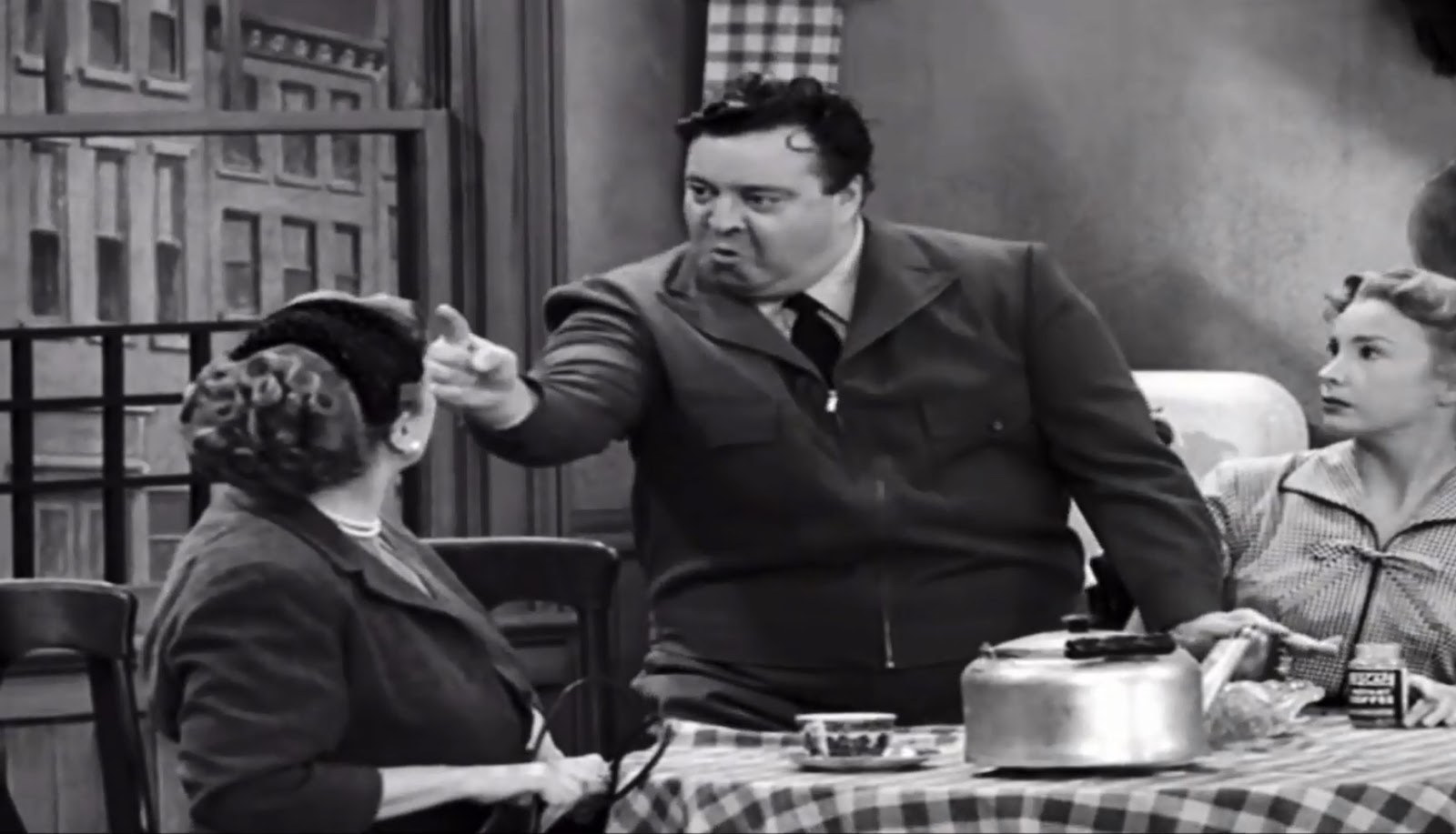
“The Honeymooners,” (“A Matter of Record”), January 6, 1956

In many ways, Ralph (Jackie Gleason) and Alice Kramden (Audrey Meadows) epitomize true love.  After all, despite Ralph’s constant and disastrous get rich schemes and loud-mouth blustering, the put-upon Alice always sees just how genuine Ralph is.  In turn, Ralph is always amazed at how understanding Alice is and never fails to tell her, “Baby, you’re the greatest!”

In “A Matter of Record,” Ralph causes quite the riff in the family, when he argues with his mother-in-law.  Well, not so much argues as “goes off” on her.  When his mother-in-law comes to visit, Ralph tries to keep his cool, but eventually can’t take it and yells (in great, hysterical,“Gleason style”) at his mother-in-law that she’s a “Blabbermouth!”

When Alice is so offended she moves out and back in with her mother, Ralph turns to pal Ed Norton (Art Carney), who convinces Ralph to record an apology on a record album and send it to Alice.  Well...not all works out perfectly, but then it wouldn’t be a “Honeymooners” episode if it did.

This episode however is not only funny, but also very poignant, shedding a light, in its own simple way, on how imperfect and forgiving love can be.


“Happy Days” (“Be My Valentine”), February 14, 1978

Originally airing on Valentine’s day, this episode of the 1950’s-set sitcom breaks out that ol’ TV trope, “the dream sequence.”  “Happy Days” takes it up a notch, however, by making the entire show a dream sequence...and a musical, as well!

While in Arnold’s (the local hamburger joint), Joanie Cunningham (Erin Moran) daydreams and as she does, we see each of the cast of characters in different romantic, musical sequences: Ralph Malph (Donny Most) sings “My Funny Valentine,” which is nothing compared to Chachi (Scott Baio) belting out “Thank Heaven for Little Girls” or Al (Al Molinaro) warbling “Isn’t it Romantic.”

If it all sounds like typical ‘70’s sitcom cheese...it is...and it’s wonderful in it’s simple, uncynical, innocent way.


“Friends” (“The One With the Candy Hearts”), February 9, 1995

It’s Valentine’s Day for the Central Perk gang in ‘90’s New York, which means that everything will go wrong.

Ross (David Schwimmer) goes on his first date since his divorce and winds up at a restaurant where his ex-wife and her lesbian lover are at.  Meanwhile, the girls Phoebe, Monica and Rachel (Lisa Kudrow, Courtney Cox and Jennifer Anniston) stay at home to perform a “cleansing ritual,” in which they lite items from their ex-boyfriends on fire...and proceed to almost burn down the apartment.

Then, there’s Chandler (Matthew Perry) who finds himself on a blind date with his annoying ex-girlfriend Janice (Maggie Wheeler).

Like all of the “Friends” episodes, this one balances quite a bit and delivers consistent laughs, balanced with solid character development.  It’s no wonder this show was “Must See TV.”  And is it funny?  As Janice would say, “Oh my Gaaaawd!”


This year, consider one or all of these sitcom episodes as part of a perfect February 14th...and go out and buy your significant other a gift!

Happy Valentine’s Day everyone!

Sources: IMDb 


Friday, February 1, 2019

Pigskin and Prisoners: The 45th Anniversary of “The Longest Yard.”


By Michael Lyons

If the biggest competition you’re concerned about on Super Bowl Sunday is between whether to have another buffalo wing or more nachos before the next commercial comes on, you may not have much of a rooting interest in the actual game.

If that’s the case, consider using Super Bowl Sunday as an opportunity to celebrate the 45th anniversary of one of the most popular football movies ever made, “The Longest Yard.”

In it, Burt Reynolds plays party boy NFL player Paul “Wrecking” Crew, who finds himself arrested and thrown in a seedy Southern prison, after taking a cop on a drunken car chase

Crew is soon literally playing for his life, as he rounds up a Team of hardened convicts to face off against the prison guards in one of the roughest, backbreaking games of football you’ve ever seen.

This was Reynolds at his swaggering, charismatic, movie star best and he delivers a memorable performance that centers a film which is constantly waivering back and forth, effectively, between comedy and raw drama.

In supporting roles, Eddie Albert, cast against type, crafts a perfect performance as the calculating Warden and veteran character actor Ed Lauter brings depth to the role of the conflicted Captain of the Guards.

Released on August 21, 1974, “The Longest Yard” is more than just a “football movie. “  Under the helm of reliable and underrated Director Robert Aldrich, the film is an analogy for bucking the establishment and a compelling redemption tale.

There have been several remakes through the years (including one in 2005, starring Adam Sandler, with Reynolds returning in a supporting role), but comparing those remakes to the original “The Longest Yard” is like, well, comparing a regular football game to The Super Bowl.

Sources:

Wikipedia