Friday, February 22, 2019

Oscar has its Effect: Looking back at Movies that took home the Academy Award for Best Visual Effects


By Michael Lyons

On Sunday night, as the world eagerly awaits to see who wore what best and wonder which winner will use the opportunity to share their political beliefs, there will be a small group of artists and technicians sitting waaay in the back of the Dolby Theater waiting their turn for their name to be announced.

They are members of the Visual Effects community, who work in anonymity throughout the year, but whose work bring life and believability to film.  Since 1928, the Academy of Motion Pictures Arts and Sciences have recognized these talented craftspeople with their own category, which was originally called  “Best Engineering Effects” (and was won by the World War I drama “Wings).”

Since then, some of film’s most eye-popping moments have been honored by Oscar.  Here are just some:


“Mighty Joe Young,” (1949 winner for Best Visual Effects ).  This story of a family who bring a large gorilla from Africa to Hollywood (and was later remade in 1998) featured stop-motion animation by effects pioneer Willis O’Brien (who had created “King Kong”).  The animation effects in this film are so detailed, extensive and immersed in the environment, it’s astounding to think it was all done by hand and no wonder Oscar rewarded the work.


“20,000 Leagues Under the Sea” (1954 winner for Best Visual Effects).  Last year’s “Aquaman” made underwater scenes look so easy, but in the pre-digital age it didn’t happen so swimmingly.  Walt Disney’s adaptation of Jules Verne’s novel brought the undersea world to life as never before...and that giant squid sequence is still a movie geek’s dream.


“2001: A Space Odyssey” (1968 winner for Best Visual Effects). Director Stanley Kubrick’s opus to space exploration is both fascinating and maddening, but one can’t deny that the visual effects are jaw-dropping and set a standard for future winners, like “Star Wars,” “Superman” and “Alien.”


“The Abyss” (1989 winner for Best Visual Effects).  Welcome to the computer age of Visual Effects.  Director James Cameron (who continually pushed the effects envelope for another twenty years after) incorporated computer generated imagery in his underwater adventure film, as it had never been done before.


“Jurassic Park” (1993 winner for Best Visual Effects).  The dinosaur is back.  Enough said.


“Avatar” (2009 winner for Best Visual Effects).  The fictional world of the Na’vi simply seem to exist.  James Cameron (again) built upon what Peter Jackson started in “The Lord of the Rings” movies: Visual Effects aren’t just part of the movie, they ARE the movie.


So, as you watch Sunday’s marathon of an awards show, don’t use the Visual Effects category as a snack break, take the time to watch and celebrate the usually uncelebrated wizards who bring our movie world’s to life.

Sources:

Wikipedia

Tuesday, February 12, 2019

Love and Laughs: Classic Sitcom Episodes Perfect for Valentine’s Day


By Michael Lyons

Forget to get a Valentine’s Day gift for your significant other?  You may be facing a rough February 14th and could be in need of a little levity.

Consider one or all of the episodes of some of TV’s classic sitcoms, each one guaranteed to theme perfectly to Valentine’s Day and each one as sweet as a heart shaped box of chocolates.


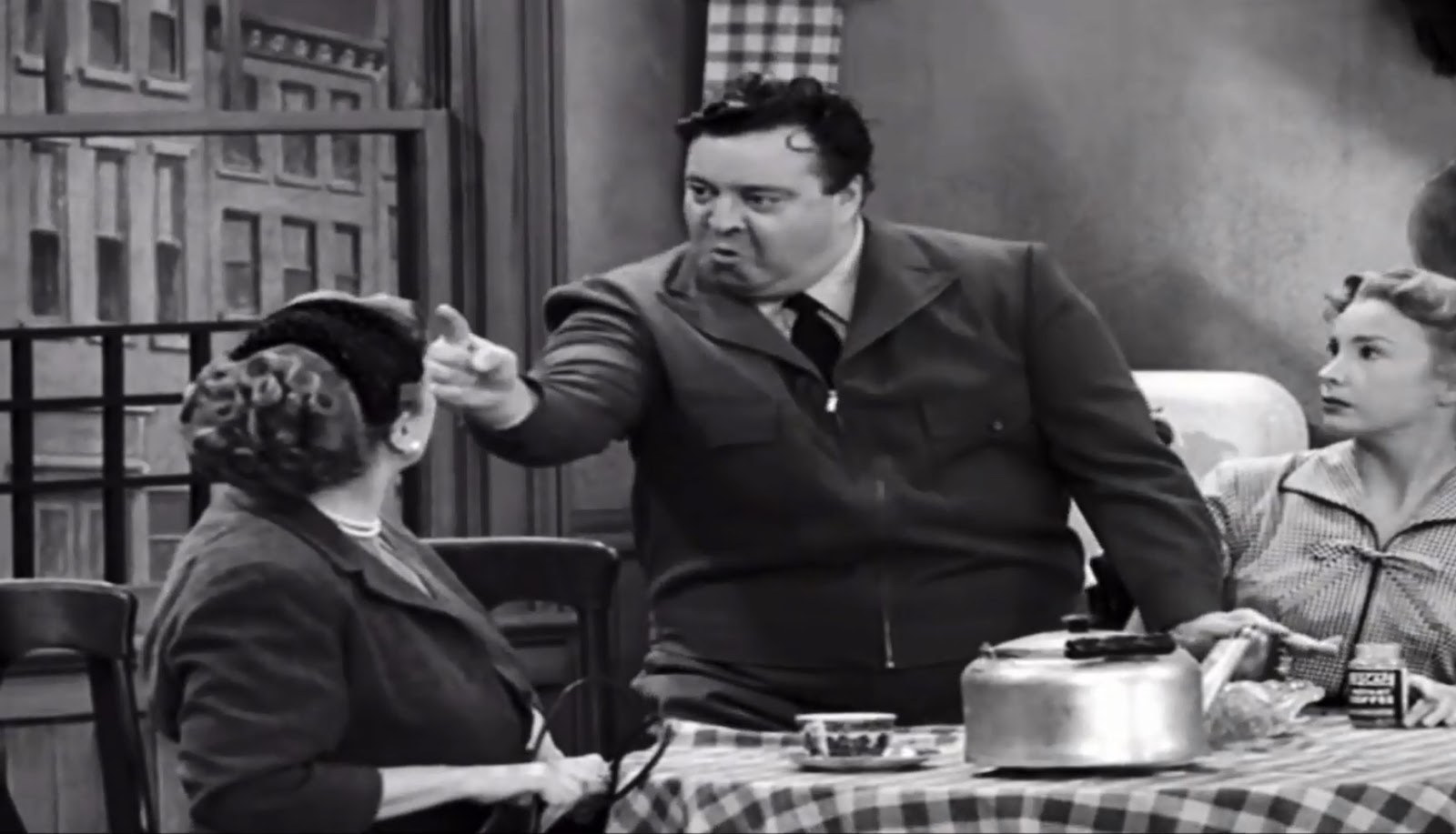
“The Honeymooners,” (“A Matter of Record”), January 6, 1956

In many ways, Ralph (Jackie Gleason) and Alice Kramden (Audrey Meadows) epitomize true love.  After all, despite Ralph’s constant and disastrous get rich schemes and loud-mouth blustering, the put-upon Alice always sees just how genuine Ralph is.  In turn, Ralph is always amazed at how understanding Alice is and never fails to tell her, “Baby, you’re the greatest!”

In “A Matter of Record,” Ralph causes quite the riff in the family, when he argues with his mother-in-law.  Well, not so much argues as “goes off” on her.  When his mother-in-law comes to visit, Ralph tries to keep his cool, but eventually can’t take it and yells (in great, hysterical,“Gleason style”) at his mother-in-law that she’s a “Blabbermouth!”

When Alice is so offended she moves out and back in with her mother, Ralph turns to pal Ed Norton (Art Carney), who convinces Ralph to record an apology on a record album and send it to Alice.  Well...not all works out perfectly, but then it wouldn’t be a “Honeymooners” episode if it did.

This episode however is not only funny, but also very poignant, shedding a light, in its own simple way, on how imperfect and forgiving love can be.


“Happy Days” (“Be My Valentine”), February 14, 1978

Originally airing on Valentine’s day, this episode of the 1950’s-set sitcom breaks out that ol’ TV trope, “the dream sequence.”  “Happy Days” takes it up a notch, however, by making the entire show a dream sequence...and a musical, as well!

While in Arnold’s (the local hamburger joint), Joanie Cunningham (Erin Moran) daydreams and as she does, we see each of the cast of characters in different romantic, musical sequences: Ralph Malph (Donny Most) sings “My Funny Valentine,” which is nothing compared to Chachi (Scott Baio) belting out “Thank Heaven for Little Girls” or Al (Al Molinaro) warbling “Isn’t it Romantic.”

If it all sounds like typical ‘70’s sitcom cheese...it is...and it’s wonderful in it’s simple, uncynical, innocent way.


“Friends” (“The One With the Candy Hearts”), February 9, 1995

It’s Valentine’s Day for the Central Perk gang in ‘90’s New York, which means that everything will go wrong.

Ross (David Schwimmer) goes on his first date since his divorce and winds up at a restaurant where his ex-wife and her lesbian lover are at.  Meanwhile, the girls Phoebe, Monica and Rachel (Lisa Kudrow, Courtney Cox and Jennifer Anniston) stay at home to perform a “cleansing ritual,” in which they lite items from their ex-boyfriends on fire...and proceed to almost burn down the apartment.

Then, there’s Chandler (Matthew Perry) who finds himself on a blind date with his annoying ex-girlfriend Janice (Maggie Wheeler).

Like all of the “Friends” episodes, this one balances quite a bit and delivers consistent laughs, balanced with solid character development.  It’s no wonder this show was “Must See TV.”  And is it funny?  As Janice would say, “Oh my Gaaaawd!”


This year, consider one or all of these sitcom episodes as part of a perfect February 14th...and go out and buy your significant other a gift!

Happy Valentine’s Day everyone!

Sources: IMDb 


Friday, February 1, 2019

Pigskin and Prisoners: The 45th Anniversary of “The Longest Yard.”


By Michael Lyons

If the biggest competition you’re concerned about on Super Bowl Sunday is between whether to have another buffalo wing or more nachos before the next commercial comes on, you may not have much of a rooting interest in the actual game.

If that’s the case, consider using Super Bowl Sunday as an opportunity to celebrate the 45th anniversary of one of the most popular football movies ever made, “The Longest Yard.”

In it, Burt Reynolds plays party boy NFL player Paul “Wrecking” Crew, who finds himself arrested and thrown in a seedy Southern prison, after taking a cop on a drunken car chase

Crew is soon literally playing for his life, as he rounds up a Team of hardened convicts to face off against the prison guards in one of the roughest, backbreaking games of football you’ve ever seen.

This was Reynolds at his swaggering, charismatic, movie star best and he delivers a memorable performance that centers a film which is constantly waivering back and forth, effectively, between comedy and raw drama.

In supporting roles, Eddie Albert, cast against type, crafts a perfect performance as the calculating Warden and veteran character actor Ed Lauter brings depth to the role of the conflicted Captain of the Guards.

Released on August 21, 1974, “The Longest Yard” is more than just a “football movie. “  Under the helm of reliable and underrated Director Robert Aldrich, the film is an analogy for bucking the establishment and a compelling redemption tale.

There have been several remakes through the years (including one in 2005, starring Adam Sandler, with Reynolds returning in a supporting role), but comparing those remakes to the original “The Longest Yard” is like, well, comparing a regular football game to The Super Bowl.

Sources:

Wikipedia

Saturday, January 26, 2019

“Hello Sunshine, Goodbye Rain:” The 45th Anniversary of “Happy Days”


By Michael Lyons

Long before “retro” and “throwback” were “Cool-a-Mundo!”  There was “Happy Days.”

Created by the legendary master of TV sitcoms, Gary Marshall, “Happy Days” took audiences of the ‘70’s back in time to two decades earlier, to the innocent ‘50’s.

The show came along at a time when America was immersing itself in all things from the “Doo-Wop Decade.”  Movies like “American Graffiti” and singing groups like “Sha-Na-Na” paved the way for “Happy Days.”

The show about a significant moment in pop culture time became one of the most significant moments in pop culture time for the ‘70’s.

“Happy Days” became a hallmark of TV at it’s time with the character of The Fonz soaring into the zeitgeist of our culture.  The show not only captured the spirit of the ‘50’s, it became exactly what TV audiences at the time needed, as we headed out of the tumultuous start of the ‘70’s.

Debuting on January 15, 1974, this month marks the 45th Anniversary of “Happy Days,” which makes it the perfect time to go back in time and celebrate the middle class Cunningham family.

“Happy Days” started life as a segment of the anthology show, “Love American Style.”  Set in Milwaukee, Wisconsin in the 1950’s, the series focused on clean cut teenager Richie Cunningham (Ron Howard), his best friends Postie (Anson Williams) and Ralph (Donny Most), as well as the Cunninghams, parents Howard and Marion (Tom Bosley and Marion Ross), kid sister Joanie (Erin Moran) and older brother Chuck( played by Gavin O’Herlihy and later by Randolph Roberts) a character who seemingly disappeared in later seasons.

The show languished until “Happy Days” brought a recurring character more to the forefront.  Arthur Fonzarelli, a/k/a The Fonz a/k/a Fonzie, a street smart, leather jacket wearing “hood,” rented a room from the Cunninghams and shifted to supporting player and soon the centerpiece of the show.

With his trademark thumbs up and sayings like “Heeeey!” And “Whoaaa,” The Fonz soon became one of TV’s most popular (and overtly merchandised) players.  To this day, he  is one of televisions most iconic characters.

Fonzie also made a superstar out of a relatively unknown actor named Henry Winkler.  In fact, so popular was the actor and the character that there was talk of a possible “Fonz” spin-off show, which Winkler and the producers wisely declined.

However, “Happy Days” did give life to a number of other spin off shows such as “Laverne and Shirley,” “Mork and Mindy” and when teen heartthrob Scott Baio joined the show, the now cult favorite “Joanie Loves Chachi.”

Like so many, long-running TV Shows, “Happy Days” did suffer from searching for new story ideas and trying to top the previous season.  This led to multi-part episodes and the entire cast traveling to new locations.

One of these was Hollywood, where, in a now infamous episode, Fonzie, on a dare, dons water skis and jumps over a shark.

The episode went on to provide TV fans with a catchphrase.  To this day, when a TV show stays on the air too long, or has run out of good story ideas, it’s said that the show has “jumped the shark.”

Ironically, even after the shark jumping episode, “Happy Days” stayed on the air through May of 1984.  Through more strange story choices and cast changes, the show continued to remain popular through its final episode.

For today’s audiences, “Happy Days” may seem corny or kitschy, but for those who grew up during the prime time of “Fonz-mania,” the show is a perfect look back at a time of innocence, made during a more innocent time.

It’s also a show that combined Marshall’s quick, urban and very funny comedy style with an always positive tone.  The show seemingly projected this to audiences each week.

This even carried through to the final line of the final episode in which Joanie and Chachi get married.  Tom Bosley, as Howard Cunningham, lifts a glass of champagne to the camera and says: “Thank you all for being part of our family.  To Happy Days.”

Sources:

“The Great TV Sitcom Book” by Rick Mitz

Wikipedia

Saturday, December 29, 2018

Reel Reflection: Looking Back at 2018’s Movie Anniversaries


By Michael Lyons

The end of the year.  A time for looking ahead…but before we know where we are going, we have to remember where we’ve been, which makes this the perfect time to look back at movies that celebrated anniversaries this past year.  Some of them blockbusters, some underrated, all of them worth remembering.


“The Dark Knight” (2008) 10th Anniversary

Director Christopher Nolan’s gritty, realistic take on Batman is so revolutionary and changed our perception of super heroes and super hero movies that it’s so hard to believe than an entire decade has passed since it debuted.  The film’s action and underlying themes still pack a wallop and Heath Ledger’s Joker (which earned him a posthumous Oscar) is still one of film’s most haunting villains.


“A Bug’s Life” (1998) 20th Anniversary

Pixar’s follow-up to the landmark “Toy Story” was no sophomore slump, the tale of Flik the ant and a circus of bugs protecting a tiny insect village from the villainous Hopper is a stirring hero’s journey filled with some of the most gorgous animation ever to come out of the Studio.

 
“Schindler’s List” (1993) 25th Anniversary

Without a doubt, one of the most powerful films ever made.  A quarter century has passed since the debut of Steven Spielberg’s masterpiece about the real-life Oskar Schindler, who saved the lives of more than a thousand Polish-Jewish refugees from the Holocaust by employing them in his factories during World War II.  The black and white cinematography is both brutal and beautiful, the story is emotionally draining, the film is still an unforgettable experience that stays with audiences, twenty-five years later.

“Die Hard” (1988) 30th Anniversary

Let the “it IS or it’s NOT a Christmas movie” debate rage on, there’s no debating that this is one of the best action movies ever made.   The story of John McLane (Bruce Willis in the role that made him a superstar) facing off against terrorists (led by Alan Rickman, so amazing in this role no matter how many times you’ve seen it) is so masterfully assembled by Director John McTiernan that it’s no wonder why it set the standard and influenced so many movies that have followed.  Yippee-Kay-Ay!

“Grease” (1978) 40th Anniversary

John Travolta, Olivia Newton-John, 50’s Nostalgia as filtered through a ‘70’s lens, a hit Broadway Show adapted into a blockbuster musical.  It’s all corny, kitschy, bubble gum pop and watchable and re-watchable as anything!  It’s no wonder that an entire generation is so “Hopelessly Devoted” to this movie.

“2001: A Space Odyssey” (1968) 50th Anniversary

Hard to believe that the movie that turned linear storytelling on its ear and ushered in an age of film as a visual event hit its golden anniversary this year.  Director Stanley Kubrick’s film is everything from mesmerizing to maddening, but one can’t deny that it’s also one of film’s most original visions that, in many ways, foretold the future (was HAL the first Alexa?!?)


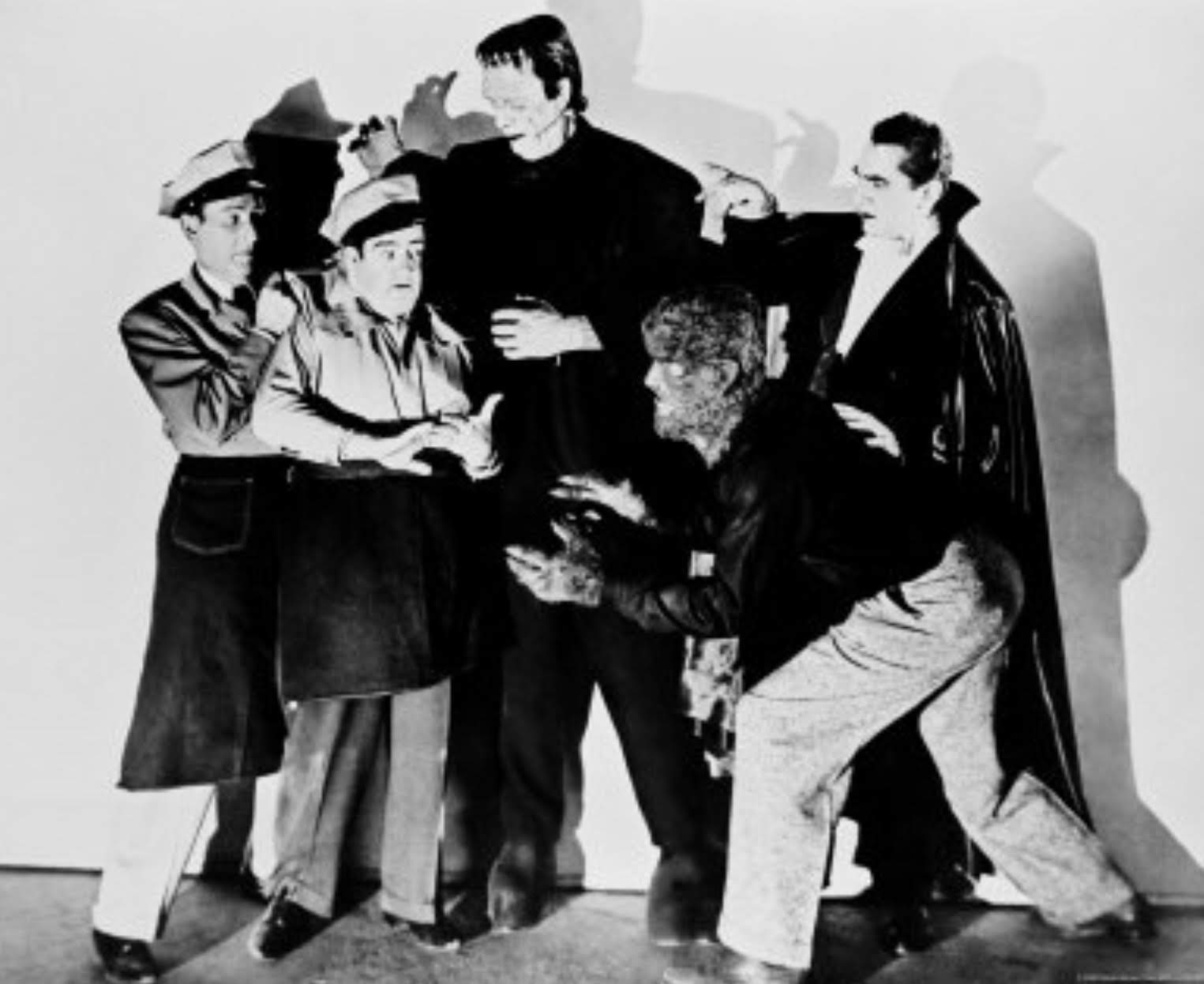
“Abbott & Costello Meet Frankenstein” (1948) 70th Anniversary

Abbott and Costello have never been funnier, the Universal Monsters have never been scarier and all of them have never been better together.  Few movies are classic comedies and few are classic horror films.  This is both.  Add it to your Halloween movie rotation!


So, as you lounge this New Year’s Day, recovering from the revere of the night before and thinking of the twelve months ahead, consider any or all of these as a movie marathon to celebrate these milestones.

Wishing everyone a Happy and Safe New Year!


Sources:
Wikipedia


Friday, December 28, 2018

“In that far off time, upon a New Year’s Day:”. The 55th Anniversary of “The Sword in the Stone”


By Michael Lyons

Disney’s “The Sword in the Stone” is a perfect movie for New Year’s Day.  It’s all about expanding one’s mind, teaching, learning and discovering that there’s more inside of you than you initially thought.  All good considerations, or even resolutions, when entering a new year.  As if that wasn’t enough, the movie concludes on New Year’s Day with Young King Arthur pulling the sword Excalibur from the Stone.

The 18th film from The Walt Disney Studio sometimes is one of their “forgotten films” (or “Disney Adequate” as some term them), but “The Sword in the Stone” has a devoted following that stretches well beyond Disney circles to devotees of the Arthurian Legend.

Based on the popular 1938 book, “The Once and Future King” by T.H. White, “The Sword in the Stone” opens with a prologue, telling us it’s a dark time, during which a mysterious sword has been left in a stone, under which resides a plaque proclaiming that anyone who pulls the sword from the stone will be crowned king of England.

We then meet a young boy named Wart, an orphan who was adopted by Sir Ector and serves as a squire to Sir Kay.  Wart is befriended by a wise wizard named Merlin and his talking owl, Archimedes.  Merlin serves as a mentor and teacher for Wart, opening the young boy’s eyes to the world.

These scenes with Merlin are true Disney animation magic.  To allow Wart to see another perspective in life, the wizard transforms them into fish, squirrels and birds.  The anthropomorphism of the animals in these sequences is perfect and the lessons learned are poignant (particularly the touching lesson about the power of love, during the squirrel segment).

During one of these sequences, there is also amazing, tour-de-force animation when Merlin comes up against the film’s villain, Madam Mim.  The Wizard and the Sorceress face off and have a “Wizard’s Duel,” which has become the hallmark of “The Sword in the Stone” and what the film has become most famous for.  In a creative, dizzying display, Merlin transforms into a rabbit, a goat, a crab and a walrus, just to name a few.  While Mim turns into a rhino, a snake, a tiger and a spotted dragon. 

Brought to the screen by animators Frank Thomas (Merlin) and Milt Kahl (Mim) the draftsmanship, expression and acting in the scene lends to its amazing re-watchability (both Thomas and Kahl were members of “Disney’s Nine Old Men,” a nickname given to the upper echelon of the Studio’s animators).

It’s after that Wart accidentally pulls the word from the stone, while attempting to get a replacement sword for Sir Kay, during a New Year’s Day Tournament.  As onlookers stand in astonishment, realizing this young boy is their King “ordained by Heaven,” the audience learns that Wart’s real name is…Arthur.

“The Sword in the Stone” isn’t near the classic stature of Disney films that came before (or since).  The film suffers from an episodic story (that ends very abruptly) and a graphic style that worked so well for the contemporary “101 Dalmatians,” (1961) but doesn’t seem to fit with what feels like a classic fable.  The sweeping grandeur of 1959’s “Sleeping Beauty” would have fit better with “The Sword in the Stone.”

Still, there is a lot to admire in the film.  In addition to the Wizard’s Duel, there’s some other great moments of personality animation, particularly from the persnickety Archimedes.  There’s also likable songs from Robert and Richard Sherman, the legendary brother songwriter team who would become stalwarts at Disney, later creating some of the Studio’s musical masterpieces.

Released on Christmas Day, 1963, “The Sword in the Stone” celebrates 55 years this month.  It’s the perfect time to celebrate this somewhat under celebrated Disney film and a perfect, magical way to ring in the New Year!


Sources:
Wikipedia


Sunday, December 23, 2018

“Oh F-U-U-U-UDGE!” It’s the 35th Anniversary of “A Christmas Story!”


By Michael Lyons

“A Christmas Story” takes place in Indiana sometime in the 1940’s, but it could actually take place anywhere and at any time.  Its tale of Christmas and childhood is so universal that no matter when or where you grew up, “A Christmas Story” has meaning for you.

This is why the 1983 film has become a necessity of the Season and why images of a glowing leg lamp and the line “You’ll shoot your eye out!” are just a few things from the film that have seared themselves into pop culture.  “A Christmas Story” isn’t just about a young boy wanting a Red Ryder B.B. gun, it’s about the wonder and magic that comes with a certain age and how the closeness of family and togetherness is the most important Christmas tradition.

“A Christmas Story” celebrates its 35th anniversary this Holiday Season.  To commemorate this milestone for this classic, what follows is a list (a “Christmas list,” if you will) of fun facts about the film:

·        “A Christmas Story” is based on the 1966 book “In God We Trust: All Others Pay Cash” by writer and raconteur Jean Shepherd.  In the book, adult Ralph Parker returns to his hometown for a visit, meets up with his friend Flick and as they reminisce, each chapter relays a different story.
·        Two years prior to the release of “A Christmas Story,” Director Bob Clark made the film “Porky’s.”  It was a box office success, but a very un-Christmas-like, R-rated teen sex comedy that couldn’t be less like “A Christmas Story.”  Clark also gave himself a cameo in “A Christmas Story,” as the neighbor who approaches The Old Man outside the house and asks about this “Major Award,” the Leg Lamp.
·        Peter Billingsley, who plays the title character of Ralphie, was already well known to audiences as “Messy Marvin,” a character who appeared in a series of commercials at the time for Hershey’s Chocolate Syrup.  As an adult, he went on to play in another Christmas classic, 2003’s “Elf.”
·        Jack Nicholson was originally considered for the role of Ralphie’s father, The Old Man.  The Studio couldn’t pay Nicholson’s salary, which actually worked out well, as it is difficult to imagine anyone but Darren McGavin in the role.  He is perfect.  Incidentally, we never learn the name of his character and he is even billed in the ending credits as “The Old Man.”
·        In order to get actor Scott Schwartz’ (Flick) tongue to stick to the flagpole in the now infamous scene, a hidden suction tube was created inside the pole.
·        The music playing in the background when Scut Farkas (Zack Ward) the bully appears is actually the theme from “Peter and the Wolf.”
·        The house used for the Parker home in the film was actually in Cleveland, Ohio and was sold on eBay in 2005 for $150,000.  After, the owner converted it to look more like the film and it is now a tourist attraction that includes a gift shop and museum dedicated to the movie.
·        “A Christmas Story” opened November 18, 1983.  It was not the success the Studio had hoped for and by Christmas that year, the film wasn’t even playing in theaters any more.  However, the VHS and Cable TV industry was just beginning to take off at this time, which gave “A Christmas Story” continued life in subsequent seasons.  By the mid-90’s, the film was so popular that the TBS Network began showing “24 Hours of a ‘A Christmas Story,’” in which the film was shown around the clock from Christmas Eve through Christmas Day.
·        The film has inspired a non-musical stage production that tours around the country each year, as well as a big-budget Broadway musical version that went on to be nominated for three Tony Awards and was adapted into a live production for FOX TV in 2017.  There has also been innumerable merchandise inspired from the film including reproductions of the Leg Lamp and Ralphie’s pink bunny pajamas.
·        The tag line on the original movie poster for “A Christmas Story” read: “A tribute to the Original, Traditional, One-Hundred-Percent, Red-Blooded, Two-Fisted, All American Christmas…”

Here’s hoping your Christmas brings to you the joy, the merriment, the laughter and the warmth that “A Christmas Story” brings to all of us each year.

Merry Christmas Everyone!

Sources:
“Christmas in the Movies” by Jeremy Arnold, Running Press
IMDb

Wikipedia