Friday, July 19, 2019

Making History: The 25th Anniversary of “Forrest Gump”


By Michael Lyons

A movie about history that made history.  That’s “Forrest Gump.”  

Director. Robert Zemeckis’ film about the title character, played by Tom Hanks in one of his many career defining roles, told the story of a simple-minded man, with an unwitting peaceful philosophy of life, who unknowingly influences a number of historical events during the 20th Century.

“Forrest Gump” not only became the biggest film of 1994, winning the Oscar for Best Picture, it also made history for its groundbreaking use of visual effects that paved the way for future possibilities in film.  It also segued smoothly into our pop culture in a number of ways that have continued on longer than Forrest could ever run.

Released on July 6, 1994, this summer marks the 25th anniversary of “Forrest Gump,” which is the perfect time to open up a “box of chocolate” fun facts about the movie:

 - “Forrest Gump” was actually based on a 1986 novel by Winston Groom, who also wrote a sequel in 1995, entitled “Gump & Co.”
 - John Travolta, Bill Murray and Sean Penn were all considered for the title role, before Hanks.  Novelist Groom Originally envisioned John Goodman as Forrest.
 - Michael Connor Humphreys, who played young Forrest, actually inspired Tom Hanks, who fashioned the character’s unique Southern drawl after hearing the young actor speak.
 - Dick Cavett played a younger version of himself (thanks to special hair and makeup), making him the only real-life cameo in the film.
 - Tom Hanks won the Academy Award for Best Actor for his work in “Forrest Gump.”  Having just won the same award the year before for “Philadelphia,” Hanks became the first actor since Spencer Tracy (in 1938) to win back-to-back acting Oscars.  Hanks is also the last actor to accomplish this feat.
 - The wizards at Industrial Light & Magic used then new and cutting edge computer effects to “morph” Hanks into archival footage with such notable figures as John F. Kennedy and John Lennon.  While looking quaint by today’s standards, the effects in “Forrest Gump” opened “anything is possible” doors in filmmaking.  In fact now, if similar effects are used, it’s said that an actor was “Forrest Gump-ed” into a scene.

It’s more than the effects that have allowed “Forrest Gump” to endure.  The movie not only celebrates the grandeur of history, but also the smaller miracles in life, like kindness, understanding and unconditional love.


Sources: Wikipedia

Saturday, June 29, 2019

Saturday Salute: TV Cartoons Perfect for the Fourth of July


By Michael Lyons

Saturday morning cartoons are often times more associated with Fall, back-to-school and the one day respite from homework, teachers and tests that they provided for many years.

However, there are a select few shows that fit perfectly in the summer, more specifically, Independence Day.  Through the years, when cartoons ruled Saturday morning TV, several of the major Studios created patriotic-themed shows.

As we approach the Fourth of July and one finds themselves unable to watch another annual rerun of “Independence Day,” it may be worth visiting, or re-visiting, one of these seldom seen TV Toon oddities.


“Hector Heathcote” (NBC, 1963).  From Terrytoons, the Studio that had given us Mighty Mouse and Heckle and Jeckle, came this show about the title character, a mild mannered teenager during Colonial times, who finds himself unwittingly getting involved during various moments in American History.

With his British accented bulldog Winston at his side, Hector would face off against the bully, Benedict.  With sometimes smart, sharp humor, “Hector Heathcote” found creative ways to weave in history into its Saturday morning silliness.


“The Funky Phantom” (ABC, 1971).  The once reigning kings of Saturday morning TV, Hanna Barbera, used the “Scooby-Doo” model for this show.  Instead of a dog going on adventures with a group of teenagers, this show centered on a spirit who befriends a group of groovy kids.

This, however, is the ghost from the Revolutionary War-era, Jonathan Wellington Muddlemore, a/k/a “Mudsy” (“The Sprit of 1776!” He declares) and his cat, Boo.

Mudsy also sounds suspiciously like Snagglepuss (actor Daws Butler provided both voices).  While not the popularity, or the re-watchability,  of other HB shows from this era, “The Funky Phantom” is still an oh-so-70’s Hanna-Barbera guilty pleasure.


“US of Archie” (CBS, 1974).  Just in time to join the nationwide fervor for the 1976 Bicentennial celebration, Filmation Studio brought us this spin on their already popular series “The Archies” (which was already an adaptation of the popular “Archie” comics series).

In “US of Archie,” Archie, Jughead, Betty, Veronica and all the gang re-enact significant moments in American history (everything from Votes for Women to the Underground Railroad).  Heavy on the education and light on entertainment, many fans preferred the lighter, musical “Sugar, Sugar” days of “Archie” to “US of Archie.” Unfortunately, the show just barely made it to the Bicentennial and was cancelled in 1976.

Today, “USA of Archie” is not only perfectly patriotic, it’s also a capsule of a time gone by.


So, this year, on July Fourth, before the fireworks and pomp and circumstance that the evening brings, wake up early with a big bowl of surgery cereal and celebrate with these shows that represent a time in TV that’s now sadly gone forever.  In fact, you could say that these Saturday morning cartoons are now a part of American history.


Sources:
IMDb

Wikipedia

Saturday, June 22, 2019

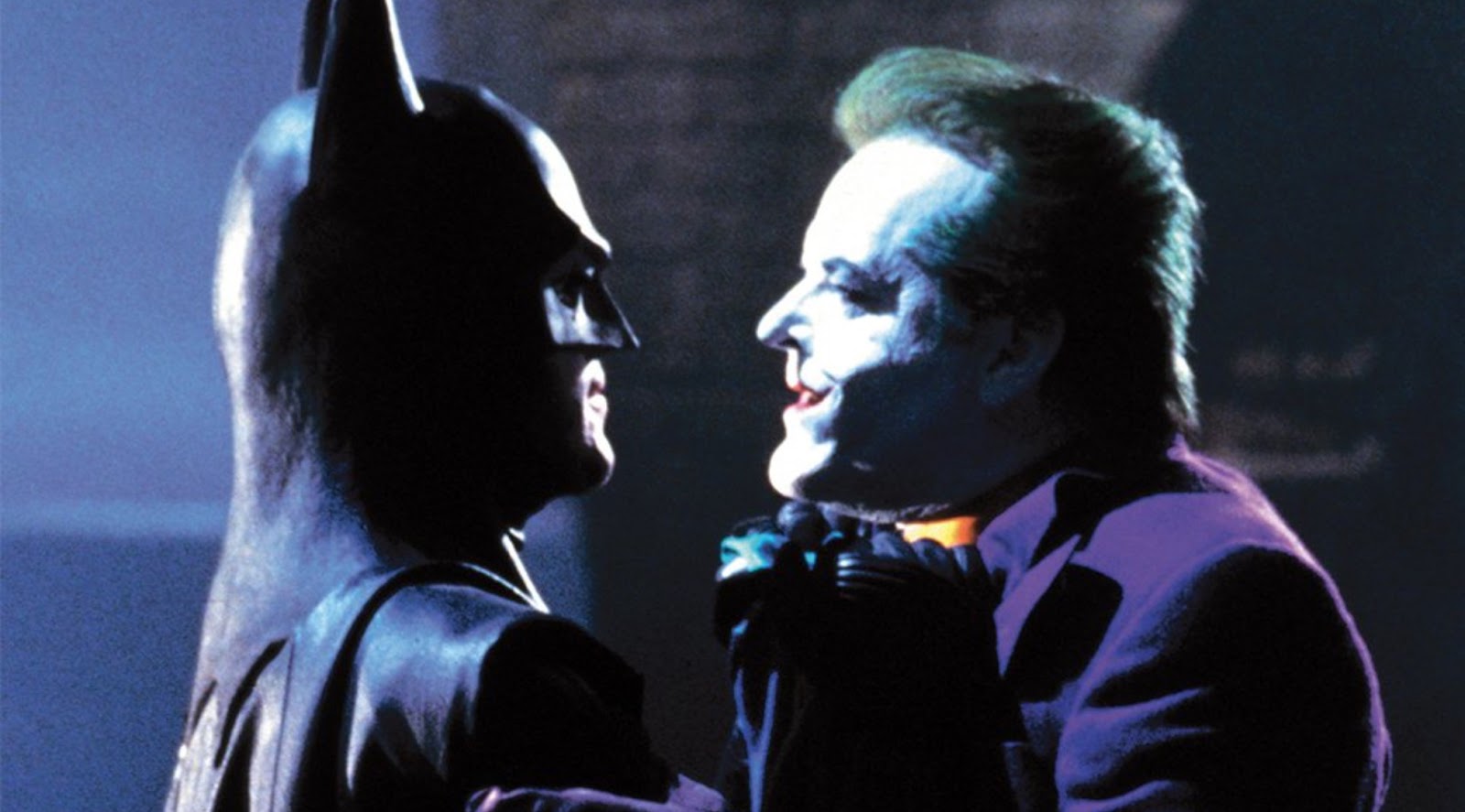
Dark Victory: The 30th Anniversary of “Batman ‘89”


By Michael Lyons

During the summer of 1989, you would have not only had to have been living under the proverbial rock, but in the basement apartment under that rock, to not know about “Batman.”

Director Tim Burton’s take on one of the world’s most iconic super heroes was, quite literally, everywhere with one of the world’s greatest mass-marketing campaigns ever.

And, no matter your feelings or fandom with “Batman,” the character or the movie, there is also no denying that this film was groundbreaking in so many ways and changed the landscape of movies (and, specifically, summer movies) forever.  And now, this summer, “Batman” celebrates its 30th anniversary.

Turning away from the campy (but lovable) style of the ‘60’s TV Show and leaning more on the character’s DC Comics roots and mythology, this version of “Batman” would be more serious and brooding than audiences were used to.

Couple this with the casting of Michael Keaton in the lead role of Bruce Wayne/the Caped Crusader and no one knew what to expect from this “Batman.”  The choice of Keaton was quite controversial at the time.  Best known as a comedian, in movies like “Mr. Mom” and Burton’s own “Beetlejuice,” fans were beside themselves when other serious and action-oriented stars of the time weren’t chosen.  Luckily there was no internet in ‘89, otherwise  it would have broken.

Then, there was also the jaw-dropping choice to have Jack Nicholson play Batman’s arch enemy, The Joker.  Not only one of the biggest names in film, but one of the most respected actors of any generation, Nicholson was more associated with serious, dramatic, Oscar-season films, than Summer blockbusters, up to this point.

His casting was a true coup and he went on to define the villain for the generation who grew up with this film.  He also garnered a paycheck and a portion of the profits from the film that is still a legend in the industry.

“Batman” (or “Batman ‘89,” as it’s come to be known to differentiate it from the multiple versions of the character that have come before and since) as film, is less an origin story of the title character (although that’s weaved in through flashback).

As the film opens, a mysterious “giant bat” has been seen in Gotham City and a group of underworld criminals, which include the brutal Jack Napier (Nicholson) attempt to take control of the City.

During a raid at a chemical plant where the mobsters come up against Batman, Napier falls into a vat of chemicals and emerges horribly disfigured as The Joker.

The Joker then launches a creepy, diabolical plan to put a smile on every citizen’s face and take over Gotham, which results in a showdown between the demented clown and cowl-cloaked hero.

The look of “Batman” is a true original.  It’s still fascinating to revel in the details of the film, with its cross between film noir and the world of Tim Burton.  The late, brilliant Art Director Anton Furst won an Oscar for his design of Gotham City, replete with Art Deco buildings that seemingly soar into the heavens.

Laid over this is an soaring, operatic score by Burton stalwart Danny Elfman, that not only feels at home in this world, but has gone to be one of the most recognizable film scores ever.

After so much hand-wringing, Keaton surprised everyone and made for a great Batman.  Tough and feral while in the cape and cowl (his sneer as he faces-off with Joker at the end is perfect) and also leaning on his comic timing while playing the absent minded Bruce Wayne.

And Nicholson?  Well, he is just SO Nicholson in this movie it’s not even funny.  He brings so much of his eyebrow arching persona to the Joker that he rightfully walks away with the film.  There’s also his oh-so-many quotable lines, like, “Can somebody tell me what kind of world we live in, where a man dressed up as a bat gets all of my press?!?”

Released June 23, 1989, “Batman” demolished everyone’s expectations of how well a summer blockbuster could perform, earning over $400 million at the box office and becoming the fifth highest grossing film of all time.  In fact, the film broke a record for how quickly it reached $100 million.  “Batman” was even one of the first movies to feature Thursday night showings at theaters and went on and on and on the entire summer.  

Part of the film’s success was the ubiquitous marketing campaign in place.  The simple “Bat-logo” movie poster was splashed everywhere and there were over 300 licensees, producing everything from action figures to cereal.  You couldn’t even turn on the radio without hearing one of the several songs that Prince had written for the soundtrack, which included the #1 hit, “Batdance.”

“Batman” was more than a movie, it was an Event.  One so big, that moviegoers felt that they HAD to see it and not just some time that summer, but opening weekend.

In fact, the movie went on to usher in the age of the “Event Movie,” in Hollywood throughout the ‘90’s.  A number of movies copied the “Batman Formula” of the Uber-hype machine and were transformed from movie to Event.  Among them were “Jurassic Park,” “The Lion King” and “Independence Day.”

But, this new era of the Summer Blockbuster began 30 years ago this summer with “Batman,” a movie that made an entire generation fall in love, not only with the Caped Crusader, but with movies themselves.

As the title character himself said, “I want you to tell all your friends about me...

...I’m Batman.”


Sources:
IMDb
Wikipedia


Friday, June 14, 2019

“Toon”-ing in to Father’s Day: Remembering Hanna-Barbera’s “Wait ‘Til Your Father Gets Home”


By Michael Lyons

Sandwiched in the middle of Hanna-Barbera’s “Flintstones” decade of the ‘60’s and “Smurfs” decade of the ‘80’s was the Studio’s eclectic “Golden Age” of the ‘70’s.  

It was during this time that the preeminent TV animation studio of the time created shows that ran the gamut of every genre possible.  One of these seldom seem shows from this time in “HB History” is “Wait ‘Til Your Father Gets Home,” a prime time animated sitcom that ran from 1972 to 1974 on NBC.  And, if “The Flintstones” was Hanna Barbera’s take on “The Honeymooners,” then “Wait ‘Til Your Father Gets Home” was their version of “All in the Family,” as it was an “of its time,” no-hold-barred look at fathers and families.

“Wait ‘Til Your Father Gets Home” centers on Harry Boyle (voiced by actor Tom Bosley, who would later go on to voice “Mr. C.” On “Happy Days”) and his family, wife Irma, teenage daughter Alice, unemployed college graduate son Chet and their youngest boy Jamie.

Harry is an average, middle-aged guy, working as a restaurant supply salesman, who may be seemingly surly and argumentative at times, but at the end of each episode audiences would learn how much he truly loves his family and would do anything for him.

The series started life as an episode of the ABC anthology series, “Love American Style,” entitled “Love and the Old Fashioned Father,” a very adult show that would air late in the prime time line up.

“Wait ‘Til Your Father Gets Home” would reflect this rather adult tone and was quite the departure for Hanna-Barbera, as there were episodes that dealt with such topics as the generation gap (focusing on the “Hippies” of the time), race relations, bigotry, adultery and even pre-marital sex...Yabba Dabba...Whoa!

There wasn’t even anything very “animated” about this animated sitcom, no brontosaurus staircases from “The Flintstones” or space-age “Jetsons” flying cars.  “Wait ‘Til Your Father Gets Home” is all very rooted in reality.  So much so, in fact that it could’ve been live-action.

The look of the show was even a departure for Hanna-Barbera, with a more simple, minimalistic tone that seemed more suited to Sunday comic strips of the time than TV animation.

There were some familiar HB elements, however, like their familiar laugh track and voice actors like Joan Gerber, John Stephenson and Lennie Weinrib.

It even had another staple from Hanna-Barbera, the catchy, ear worm of a theme song that includes the lyrics that seem to sum up the sitcom: “Dad’s not so bad and he seldom gets mad and we aren’t about to desert him.”

 “Wait ‘Til Your Father Gets Home” looks at main character Harry as the hero and like most Dads, a put-upon, unsung one at that.

This makes this lost Hanna-Barbera sitcom perfect viewing for Father’s Day.  Bringing this show out of the “HB Archives” and dusting it off for a marathon would be perfect...but before you watch it just “Wait ‘Til Your Father Gets Home!”

Happy Father’s Day!


Sources:
IMDb
Wikipedia


Saturday, June 8, 2019

Like, Totally Blockbuster: Remembering the Summer Movie Season of 1984


By Michael Lyons

If the Summer Movie Blockbuster was born in the 1970’s, with box-office behemoths like “Jaws” and “Star Wars,” then it stands to reason that the Summer Movie Blockbuster grew into its “Golden Age” in the 1980’s.

And one Summer during this “Golden Age” would shine brightly.

The Summer Movie Season of 1984.

The sequel to one of the most popular adventure movies of all time; the world’s biggest box-office comedy; movies that changed the rating system forever and the film that gave us the phrase “Wax on, wax off.”

And that all happened in three months, thirty five years ago.

A mixture of blockbusters that pierced our pop culture core and movies that were mild success that have gone on to become ‘80’s time capsule cult favorites, the hits just a kept on comin’ faster than Casey Kasem could have announced ‘em.

It all started off with a whip-crack on Memorial Day Weekend with “Indiana Jones and the Temple of Doom,” a highly anticipated follow-up to 1981’s “Raiders of the Lost Ark.”

This was followed in June by “Star Trek III: The Search for Spock,” another successful sequel in that franchise that allowed the films to go on for years to come.  That month also saw “Ghostbusters,” which became part of our pop-culture like few movies had and also went on to become not only the biggest movie of the year, but also the most successful comedy of all time.  Still, to this day, “Ghostbusters” remains one of the most memorable, quotable and re-watchable films ever made.

Then, there was “Gremlins,” the second Spielberg one-two punch of the summer (he produced “Gremlins” and directed “Temple of Doom”).  This cartoon-inspired tale of the “Mogwai,” along with “Temple of Doom,” were so intense that it warranted the creation of a new rating from the Motion Picture Association of America.  And, thus was born “PG-13: Parents Strongly Cautioned-Some Material May be Inappropriate for Children Under 13.”  It was a rating for those movies that were too strong to be PG and too tame to be R.  Still in effect today, the rating allows for a wider audience for many movies. 

“The Karate Kid” also debuted this summer and became a beloved “Rocky” story for a new generation (which made sense, as it was directed by John G. Alvidsen, who had helmed “Rocky” just eight year before).  “Karate Kid” was a character driven, no FX movie, which summer movies seasons rarely provide today.

As the Summer moved on, audiences got “The Last Starfighter,” a science fiction fantasy that revolved around video games as training ground for a galactic battle (oh, how ‘80’s!) and also featured landmark use of computer effects (that, in today’s world look like a video game).  

There was also “The Muppets Take Manhattan,” which many fans count as their favorite (as well as the film that gave us Muppet Babies!) and the epitome of ‘80’s fantasy films, “The Never Ending Story.”  And don’t forget one of the’80’s best remembered “teen comedies,” “Revenge of the Nerds.”

There was also the release of “Red Dawn,” the brutal, teen World War III movie that was the first film to be rated...you guessed it...PG-13.

Then, just as July was giving way to August and the waning days of Summer and Summer Movies, one of the musical icons of the decade, Prince brought us “Purple Rain.”  An original vision, that expanded on the music videos of the time and provided songs that became not just the soundtrack of 1984, but are still some of pop music’s most memorable hits.

There were other, moderate to less successful films of the summer, like director Walter Hill’s rock and roll action flick, “Streets of Fire,” to Tom Hanks crass, yet likable comedy “Bachelor Party” and “Top Secret,” the Zucker Brothers parody of...everything.  But, even those films have developed quite the following through the years.

A favorite Summer of Movies is always a subjective thing.  Movies become the backdrop to whatever we may have had going on in our lives at that time, which can always cast the films (and the Summer) in an overly nostalgic glow.

Some may prefer 1982 and the Summer ET wanted to go home, or ‘85 when Marty took the DeLorean back in time or when Batman ruled Gotham City and the world in ‘89.

But, while there was a luster during many Summers of this “Golden Age,” there is one Summer that did indeed shine brightly.

The Summer Movie Season of 1984.


Sources:

Wikipedia 

Saturday, May 25, 2019

Happy “Indy”-versary: Celebrating Two Indiana Jones Milestones


By Michael Lyons

“If Adventure Has a Name, It Must Be Indiana Jones.”  This tag line from the movie poster of “Indiana Jones and the Temple of Doom” is not only brilliant, succinct marketing, it’s also a whole lot of truth in one sentence.

The character of Indiana Jones has been played by none other than Harrison Ford, who on the “Today” show this week stated that no one else could or should play the character and fans most definitely agree.  

Indiana’s franchise of films were created and produced by George Lucas and directed by Steven Spielberg, the architects of the summer movie blockbuster and the films have become synonymous with what we expect from adventure movies.  So much so in fact that since the character’s first film, 1981’s “Raiders of the Lost Ark,” a template was set for what audiences (and Hollywood) expect from action movies.  The character’s name has even become shorthand description for many (“it’s an ‘Indiana Jones-like story...”), which tells all exactly what they need to know.

This month not one, but two, Indiana Jones movies celebrate milestones: it’s the 35th anniversary of “Indiana Jones and the Temple of Doom” and “Indiana Jones and the Last Crusade” celebrates 30 years.

What better time to “whip out” some thoughts about the iconic, adventure-seeking professor in the famed Fedora.


“Indiana Jones and the Temple of Doom” (Released May 23, 1984).  The follow-up to “Raiders of the Lost Ark,” a prequel that finds Indy trapped inside the titular Temple in India, where a cult has enslaved a village full of children and is practicing dark magic.

And that dark magic aspect took many aback when the film was released.  The tone of this film is indeed darker, more brutal and gorier than “Raiders” (snake surprise anyone?).  In fact, these elements in the film eventually led to the initiation of the PG-13 rating.

Additionally, there was no Marion Ravenwood (Karen Allen) as Indy’s tough-as-nails love interest.  Instead, we get singer Willie Scott (Kate Capshaw) as a damsel in distress, who provides levity and, at times, an audience perspective to the film.  There’s also Short Round (Key Huy Quan), Indy’s young sidekick, who is the perfect blend of cute and capable.

Despite these differences, the film is still wall-to-wall with Spielberg’s virtuoso touches.

The opening sequence in a Shanghai night club, from its dance number to its action sequence is pure movie magic and the sequences inside the Temple harken back to classic Hollywood horror films.

And those action scenes Indy is known for?  From escaping a crashing plane using an inflatable raft to a roller coaster climax on mine cars, “Temple of Doom” wears you out and doesn’t disappoint.

It’s a much different Indiana Jones from what’s come before or since, but one can’t deny that “Temple of Doom” is still an exhausting blast of movie action fun, even three and a half decades later.


“Indiana Jones and the Last Crusade” (Released May 24, 1989).  In what we thought was the last Indiana jones film ever, Indy goes in search of the Holy Grail and, along the way, rescues his father, Dr. Henry Jones, who has been kidnapped by Nazis, who are also searching for the Grail.

In many ways, this film feels as if it’s “righting the wrongs” that many fans felt were in “Temple of Doom.”  In fact, “Last Crusade” is so much lighter in spirit, it could almost qualify as a comedy (and a really funny one at that).

As Indy’s father, Sean Connery is perfect and inspired casting.  After all, who better to play Indy’s dad than the original James Bond?

Additionally, Ford and Connery have brilliant chemistry and their scenes together are filled with assured acting and comic timing.  The film’s running gag of Henry calling Indy “Junior” and Indy rebuking “Don’t call me Junior!” Is still funny all these years later.

This lighter tone carries over to the action scenes, which have a theme park-ride giddiness to them.  Particularly fun are a breakneck motorcycle chase and an escape from a zeppelin via biplanes (Connery’s delivery of a comic punchline here is still hysterical).

“Last Crusade” also provides some backstory about Indy, in an opening sequence, set in 1912.  Here young Indiana (played by River Phoenix) steals an artifact from an archeological dig, while on a Boy Scout expedition.  Phoenix does a brilliant job of “mimicking” Ford’s mannerisms in this scene, so that he truly feels like a younger version of the character.

While many have scoffed at this sequence for that fact that all of Indy’s impactful life experiences seem to happen in one day, it still plays like a good-natured, comic-book origin story.

In fact, the whole film is good natured, almost like a “Indiana Jones’ Greatest Hits,” (Nazis, the return of familiar faces like Marcus and Sallah and an ending escape from a booby-trap laden mystical cavern).  And through it, all involved, including Spielberg, (whose trademark cinematic touches are a wonder to behold here) are having a great time.

“Indiana Jones and the Last Crusade” also carries with it a theme about the importance of family bonds, as Indy and his Dad learn that this is the greatest treasure the world has to offer, one they have been searching for and now have finally found.


Both of these movies are prime examples of that well-worn movie critic saying “It’s why we go to the movies.”  The excitement, laughter and fun that both “Temple of Doom” and “Last Crusade” supply go hand-in-hand with a popcorn scented darkened theater.

For thirty and thirty five years, both films have both provided an endless supply of adventure...and, after all, “If Adventure has a Name, it must be Indiana Jones!”


Sources:
IMDb

Wikipedia

Saturday, May 18, 2019

Carol’s Crack-Up: Celebrating Tim Conway’s Greatest “Carol Burnett Show” Moments


By Michael Lyons

Television in the 1970’s could most definitely be called “The Golden Age of Variety Shows,” a genre that has all but disappeared and is remembered now only by the numerous “rerun channels” on cable services.

And without a doubt, the reigning “Queen of the Variety Show Golden Age” was Carol Burnett.  Her CBS show, which aired from 1967-1978 set the standard for comedy skit shows that would follow.  In addition to sharp writing, her cast which included Vickie Lawrence, Harvey Korman, Lyle Waggoner and Tim Conway added to making “The Carol Burnett Show,” the classic that it is.

Conway, (who was a recurring Guest and later became a regular on the show) had an innate gift for improvisation and character creation that, more often than not, caused his co-stars to laugh uncontrollable and barely get through a skit.  Harvey Korman in particular, was many times the victim of Conway’s comedic gifts and the unscripted laughter that would break-out in their scenes is the stuff of television legend.

Sadly, we lost Tim Conway this past week, when he passed away on May 14th.  While he will be missed, he gave the world a gift of laughter that will live-on in repeats forever.

No better time to celebrate this comedy legend and his greatest “Carol Burnett Show” moments:

“The Dentist” (1969) One of the first skits between Conway and Korman, in which Conway plays a bungling dentist who continually, accidentally injects himself with novocaine. The physical comedy that results from this is nothing short of miraculous.  Korman, playing the patient, seems to be in pain from trying to stifle his laughter to get through the skit...and we feel his pain.

“Mrs. Wiggins” (1976).  Burnett was the main character,  a dim-witted, slow paced secretary and Conway, her boss, Mr. Tudball, who talked with an accent that seems like a cross between Porky Pig and the Swedish Chef.  The skits were a prime example of Conway’s amazing ability to craft a character.

“The Interrogator” (1974).  A send up of World War II propaganda films, in which Conway plays a Nazi officer who uses a Hitler hand puppet to interrogate an American soldier (Waggoner).  Conway is relentless in his improv here and Waggoner is eventually helpless at stifling his laughter.

“The Oldest Living Fireman” (1973).  Another of Conway’s amazing creations, a slow moving, shuffling “Oldest Living Man” who here, as a fire fighter, attempts to give mouth-to-mouth to Korman, who winds up in hysterical tears by the end of the skit.

“The Elephant Story” (1978). A skit that centered on the recurring characters of “Mama’s Family,” Burnett, Lawerence and then show regular Dick Van Dyke are helpless as Conway regales them with a story that is completely improvised and utterly hysterical.  None of the actors are able to keep a straight face and the scene was taped twice and finally ended because of Lawrence’s PG-13 remark that brings down the house.  Search for this on You Tube and get ready for a case of non-stop laughter.


Social Media was abuzz after Conway’s passing this week, particularly comedians who discussed the influence that he had on generations that followed.

A legacy of joy and laughter is an admirable one and we can all be thankful to Tim Conway for that.  In his life, he could even find laughs when discussing the dark subject of death, as he once said:

“I spend a lot of time thinking of the hereafter - each time I enter a room, I wonder what I am here after.”

We will miss you Tim.

Sources:
IMDb
Wikipedia