Thursday, May 31, 2018

Second Helping: Celebrating the 40th Anniversary of “Jaws 2”


By Michael Lyons

“Jaws 2” would be a great film...if there had never been a “Jaws.”

It is after all a sequel to one of the most popular films of all time.  The original “Jaws” essentially gave birth to the Summer Movie Season and the Blockbuster.  It was a film that had such a wide spread impact on pop culture that, to this day, there is trepidation at beaches each and every summer.  It was a film whose lines of dialogue and “dah-dum” John Williams’ score have become more than just a part of the movie.  And, “Jaws” also propelled a young, wunderkind director named Steven Spielberg into the Hollywood stratosphere.

Yes, that 20 (or is it 25?) foot great white shark from “Jaws” casts quite the shadow that looms large over “Jaws 2.”  We are most definitely swept up in the story of the sequel and seeing familiar faces and settings, but throughout the film, there’s always the original in the back of our mind.

With this June marking the 40th anniversary of “Jaws 2,” its the perfect time to look back at one of film’s most famous sequels.

Set once again in the small, New England town of Amity (put that on your list of places to avoid on summer vacation), the film takes place several years after the events of the original.  Once again, another great white shark is terrorizing the inhabitants of the island and once again, Chief Brody (Roy Scheider) must convince everyone that this threat is real and face the shark himself.

While that does seem carbon copy, there is a unique element to “Jaws 2” in that, as it’s set several years after the original, it allows one of the Sheriff’s sons, Mike to be a teenager and introduce his high school friends, which is an aspect that sets the sequel apart.

The last third of the film centers on Mike and his friends trapped on their damaged sailboats on the open water and being persistently pursued by the shark.  This turns “Jaws 2” into almost a more horrific version of Alfred Hitchcock’s “Lifeboat.” 

These scenes feature some intense attack sequences (one in which one of the teens struggles to climb on board a capsized boat, while the shark bears down, is a true edge of seat moment).

Director Jeannot Swarc did a solid job of choreographing the action in these moments.  It was an unenviable job to have to follow Spielberg, but Swarc does admirable work here, attempting to give “Jaws 2” an identity all of its own.

Swarc also did a nice job of creating continuity from “Jaws.”  What helped with this were many returning, original cast members.  In addition to Scheider, Lorraine Gary is back as Ellen Brody, Murray Hamilton as Mayor Vaughn (the worst politician with the best jacket) and Jeffrey Kramer as Hendricks.

The actors all settle easily back into their roles, providing a nice sense of comfort and familiarity, which sometimes works against the film, once again reminding us of the superior original.

Still, even with this baggage, “Jaws 2” is a movie that “Jaws” fans can truly revel in.  Released on June 16, 1978 (with one of the most memorable tag lines: “Just When You Thought it Was Safe to Go Back in the Water!”), the film, with serviceable tension and excitement, coupled with the backdrop of New England summer, is perfectly fine and entertaining viewing for this time of year.

However, if it hadn’t been for “Jaws,” “Jaws 2” would have been more than that.

Sources:
IMDb

Wikipedia

Wednesday, May 23, 2018

Weekend Warriors: Looking Back at Memorial Day Summer Movie Blockbusters


By Michael Lyons

This year, summer started on April 27th.  That was the date Marvel Studios moved the release date of “Avengers: Infinity War” to, after relocating it from the first weekend of May.

And with that, the Summer Movie Season began!

Thanks to “Star Wars,” which was released on Memorial Day Weekend of 1977, that first “unofficial weekend of summer” became the first official weekend of the Summer Movie Season.  For years, Memorial Day with family get togethers, bar-b-q’s and beach openings was seen as a poor weekend to release a movie...but George Lucas changed all that.

And since then, that first official movie weekend crept up earlier and earlier in May.  The weekend before Memorial Day soon became a tent pole weekend for Studios (“Willow,” “What About Bob?” And “Die Hard with a Vengeance” are just a few who staked out that spot) and then in 1996, “Twister” opened on Mother’s Day Weekend, to record box-office numbers and Hollywood soon realized that audiences were ready for summer as soon as April ended.

For years after that, Marvel took the first weekend of May to release their latest super hero opus and kick off the season and this year, the calendar stretched even further to late April.

But at one time, Studios held their cards for Memorial Day Weekend and audiences waited patiently for the Summer Season of popcorn fun to begin.  While many of these most memorable and successful films released on this weekend have the names Spielberg and/or Lucas attached to them, other films also sought out Memorial Day to get the most bang from their box office.

While big and anticipated at the time, most of these films have become forgotten time capsules.  But, as we find ourselves heading into Memorial Day Weekend and knee deep in another Summer Movie season, it’s the perfect time to look back at these blockbusters that once were.


“Crocodile Dundee II” (Released May 25, 1988).

Hard to believe that thirty years ago the original “Crocodile Dundee” (1986) was so popular that Paramount Studio not only green lit a sequel, but one that was one of their big summer movies and was released on Memorial Day Weekend.  In fact, the sequel beat out “Rambo III” at the box-office.

Part II involves the main character (Paul Hogan, who also wrote the screenplay with his son Brett), getting involved with gangsters, who follow him back to Australia.

Essentially a reversed plot from the original and much more likable fish-out-of-water story, “Crocodile Dundee II” is the epitome of the carbon copy sequels that were so prevalent in the ‘80’s.

Not a terrible movie, just an uninspired one.  It works as a time capsule, but for sheer charm and entertainment, stick with the original.


“Cliffhanger” (Released May 28, 1993)

Twenty-five summers ago, as audiences waited on “Jurassic Park,” this film was a comeback of sorts for Sylvester Stallone, after several box-office disappointments.  In it, he plays a ranger who finds himself involved in a botched heist and is forced to help the criminals scale down a treacherous mountainside.

This is Stallone at his action hero best, thanks to director Renny Harlin, an action film virtuoso in the late ‘80’s and early ‘90’s.  Filled with some absolutely dizzying camera work and great action set pieces (albeit some go one way too long and push the believability envelope), “Cliffhanger,” with it’s snow capped mountain setting, is most definitely a cool way to spend a summer day.


“Godzilla” (Released May 20, 1998)

If you are looking for an example of the behemoth, mass-marketed, gotta-see-it, summer event movies of the ‘90’s, look no further than “Godzilla.”

Twenty years ago, filmakers Roland Emmerich and Dean Devlin were hot off of the success of 1996’s “Independence Day” and were given carte blanche when bringing one of filmdom’s most famous monsters back to the screen.  In their version of “Godzilla,” Matthew Broderick plays a nuclear scientist who is recruited by the government to help control a radiation-induced, ginormous reptile who wreaks havoc on New York City.

Filled with scene after scene after scene of epic chaos and destruction (which has become a Emmerich and Devlin hallmark), “Godzilla” is movie “junk food”: the audience eats and eats and eats and feels terrible afterward.

The script takes missteps at every turn (all of which had purists fuming) and never really takes itself seriously.  The end result is a true guilty pleasure, in a big way.  After all: “Size Does Matter!”


“Bruce Almighty” (Released May 23, 2003)

Fifteen years ago, Jim Carrey was at the height of his “Aaaaaallllrighty then!” Popularity when he starred in this clever film about a news reporter who is granted all of God’s powers for one week.

One of several of Carrey’s collaborations with director Tom Shadyac, “Bruce Almighty” has a number of well orchestrated comic moments (the scene in which Carrey controls everything his rival, played by Steve Carrell, says, is brimming with amazing comedic timing).

In addition to being a solidly funny film (even on repeat viewings), “Bruce Almighty” also has a strong, underlying theme that centers on the responsibility that comes with any type of power.

When it opened in 2003, “Bruce Almighty” went on to take in the second highest Memorial Day Weekend box office, up to that point, proving that, at this time, there was nothing funny about the popularity of any Jim Carrey movie.


These movies, like so many others before and after have helped usher in Hollywood’s sun-drenched and most profitable season, which next year may begin on Easter Sunday!

Wishing everyone a great Memorial Day Weekend and a Happy Summer!

Sources:
IMDb
Wikipedia

Saturday, May 19, 2018

The Last Laugh: Celebrating Two Memorable Sitcom Farewells


By Michael Lyons

The month of May in the Television Industry is like graduation.  The networks all get their grades, some shows move on to the “new semester,” some “fail” and some “graduate and move on.”

This last group would be a “series finale,” where we would bid farewell to a show that had become a friendly place to visit and characters that had become great friends.

For years, prior to our current state of streaming, cable and multiple networks, the May ratings “sweeps” period would be the time when the major TV networks jockeyed for viewers and scheduled their big “events.”  Many of these would be series finales.

This month two final shows from two of TV’s greatest sitcoms celebrate anniversaries.  So, it’s fitting to take a look back at how we said good bye to the place “where everybody knows your name” and “the show about nothing.”


“Cheers” (“One for the Road, Part 3”).  Originally aired May 20, 1993

Twenty-five years ago audiences bid farewell to a show that was both a throwback and a landmark.  “Cheers” was ensemble comedy at its best and like all of television’s best sitcoms, we came to know Sam, Diane, Rebecca, Woody, Norm, Cliff, Frasier and the entire cast as our good friends, who spent time at a watering hole that looked like the world’s most inviting hang-out and gathering place.

In this final episode (the third part of an extended prime time “event”), Sam (Ted Danson) reconnects with long lost love Diane (Shelly Long, returning to the show that she had exited several seasons eaelier), Rebecca (Kirstie Alley) gets her chance to finally marry (to Guest Tom Berenger), Woody (Woody Harrelson) embarks on a new career in politics and many of the other stalwart characters look to new adventures.

The on-point comedic writing is on display in this last episode, as well as a true sense of melancholy, but one that never hangs over the proceedings as a dark cloud.  There is a sadness to this last episode, but not one in which we feel as if we will never see the characters again, but instead that they will continue to go about their lives without us.

In the final scene of the show, when Sam tells a patron at the door that “We’re closed” and then walks to the back of the bar (adjusting a picture of Geronimo, which was actually a tribute to the late actor Nicholas Colasanto, who played Coach and had passed away in 1985.  The photo had once hung in Colasanto’s dressing room), we truly feel a farewell to the “Cheers” gang in those last silent moments.

It was sad to see “Cheers” end, not just because it was the type of show that probably could have run forever, but also because it represented a time in television that was fading away in 1993.

“Cheers” was the last of a generation of “appointment TV shows” where fans would check “TV Guide” for the week and gather around their televisions at a certain time, to make sure they didn’t miss a thing.  Cable, VCR’s and eventually DVR’s took all of this away, making “Must See TV,” whenever we wanted to watch it.

But from 1982-1993, everyone made sure they stopped by a Boston bar every Thursday night at 9:00.  Cheers to “Cheers!”


“Seinfeld” (“The Finale”).  Originally aired May 14, 1998

One of the most eagerly anticipated, as well as one of the most unexpected series finales aired twenty years ago this month.  “Seinfeld” had always been a show that “veered left” of what was usually expected, so it’s no surprise that the series finale did the same.

The show had become a TV sitcom juggernaut during its nine years on NBC and one that many still deem TV’s greatest comedy.  Jerry Seinfeld was able to translate his stand up that took a different look at life’s everyday, into a show about a comedian who took a different look at life’s everyday, resulting in a sitcom that is still relatable and quotable twenty years after its finale.

In the final show, Jerry (Jerry Seinfeld), George (Jason Alexander), Elaine (Julia Louis-Dreyfus) and Kramer (Michael Richards) decide to fly to Paris to celebrate the fact that Jerry and George have just landed a sitcom deal with NBC.

When their plane emergency lands in a small town and the quartet laugh at a gentlemen being car jacked, they are all arrested and put on trial for violating a Good Samaritan Law.

What follows is a parade of court room witnesses who are actually recurring and other characters that had appeared on episodes through the years...and most of whom were, in one way or another, wronged by the four leading characters.

In the end, all four are found guilty and sentenced to one year in jail.  In the last shot, they are all sitting in their jail cell (in a nice “bookend,” Jerry and George relay dialogue that was in the show’s first episode).

At the time that this final episode aired, many were not impressed, as the episode almost provided closure...but in the end didn’t.  The show even threw in a near-death and two characters coming close to saying “I love you,” but never delivered on it.  All of that is what is so great about this finale.  “Seinfeld” thumbed its nose at what was expected of a sitcom and proved why it truly was a landmark show that has never been equaled.

To paraphrase “Seinfeld,” this finale was “real and they were spectacular!”

Remembering these two TV “graduations,” twenty to twenty five years later, it’s easy to see why both “Cheers” and “Seinfeld” were both considered valedictorians of comedy.

Sources:
IMDb
TVGuide.com
Wikipedia


Thursday, May 10, 2018

A Mother’s Day “Carol:” Mrs. Brady’s Best Episodes


By Michael Lyons

“I don’t have to be logical.  I’m a mother.” - Carol Brady

To all those who think outside of logic; to all those who hold a house together; to all those who place constant, needy conversations above their own thoughts; to all those who run on the power of love and family, there’s a day thats all about you...

...Mother’s Day!

What better way to celebrate Mother’s Day than to celebrate the TV Mom who has come to epitomize motherhood (yes, even in its most unrealistic state) for multiple generations: Carol Brady of “The Brady Bunch.”

From 1969 to 1974 and in countless reruns to this day, one of TV’s most popular and enduring sitcoms has continued to resonate, despite the fact that everything in it is not of this world, but instead exists in some, shiny, pretty world that could only exist in TV sitcoms of yesteryear.

One aspect of “The Brady Bunch” that resonated, particularly with kids, was the quiet, warm, nurturing mom, Carol Brady.  Played so well by the late Florence Henderson, she was the kind, loving, firm, quirky, entertaining force that could hold the impeccable Brady household together and still belt out a good show tune every now and then.

In honor of Mother’s Day, it seems fitting to look back at some episodes of “The Brady Bunch” that centered around Carol and why she made kids everywhere want to be part of the “Bunch.”

“The Grass is Always Greener” (Originally aired March 13, 1970)

In this “battle of the sexes” episode, Mike Brady (Robert Reed) and Carol are comparing and contrasting the difficulties of being a mom and dad, each feeling their particular gender has it more difficult.

To settle the score, they both decide to switch places for a weekend, Mike will teach the girls to cook, while Carol will coach the boys in baseball.  The results in both are disastrous, but come with some great moments of physical comedy from Henderson.

In the end, both come to a realization that neither domestic role is easy and mothers and fathers each come with their own unique challenges.  And, as the viewer, we get a glimpse at a time before smart phones and streaming movies, when weekends were dedicated to scouting projects and backyard baseball.  Plus, Mrs. Brady swings a mean bat!

“The Fender Benders” (Originally aired March 10, 1972)

While leaving the a supermarket parking lot, Mrs. Brady is involved in a fender bender with a gentleman named Mr. Duggan (Jackie Cooper, Uncle Fester from “The Addams Family”).  All seems minor at first, until Duggan decides to take Carol to court to sue for damages to his car.

As we discover that Duggan is underhanded, Mrs. Brady emerges as the honest, innocent party in a court room scene that could only play out on ‘70’s sitcoms, showing why Mrs. Brady will always be the TV Mom we “judge” to be the best.

“The Show Must Go On??” (Originally aired November 3, 1972)

Greg (Barry Williams) and Marcia (Maureen McCormick) dupe their parents into participating in “Family Frolics,” a talent show at the local high school.  In the show, Carol and Marcia perform the song “Together” from the musical “Gypsy.”  It’s a sequence that always brings about a smile and showcases Henderson’s Broadway talents...and once again that there was nothing Mrs. Brady couldn’t do.

“You’re Never Too Old” (Originally aired March 9, 1973)

In this episode, Florence Henderson dons prosthetics to play a “dual role” as Mrs. Brady’s great-grandmother, a widow who the kids try to fix up with Mr. Brady’s great-grandfather (yup, played by Robert Reed).

The highlight of this episode is a trope trotted out in a number of ‘70’s sitcoms, in which the stars of the show don latex makeup to play an older member of the family.  This one is a tour-de-force for the two leads and as charmingly “Brady” as they come!


These are just a few memorable moments in “the story of a lovely lady!”  And, to so many other lovely ladies out there...

...Happy Mother’s Day!

Sources: IMDb


Wednesday, May 2, 2018

Ewok This Way: Celebrating the 35th Anniversary of “Return of the Jedi!”


By Michael Lyons

A Long Time Ago (well, about three and a half decades ago) in a Galaxy Far, Far Away (or, at least, crowded theaters), geeks throughout the universe thought that we were about to see the very last “Star Wars” film.

Today, such a thought seems like more than a nightmare to fans, who are used to getting a new “Star Wars” film once a year, or thanks to the upcoming “Solo,” every six months!

But back in the summer of 1983, we all thought that George Lucas’ “Skywalker Saga”  and “Star Wars” movies in general, had come to an end with “Return of the Jedi.”

With the film’s 35th anniversary this month, what better way to celebrate “Star Wars Day” (“May the 4th Be with You!”) than to take a look back at “Return of the Jedi.”

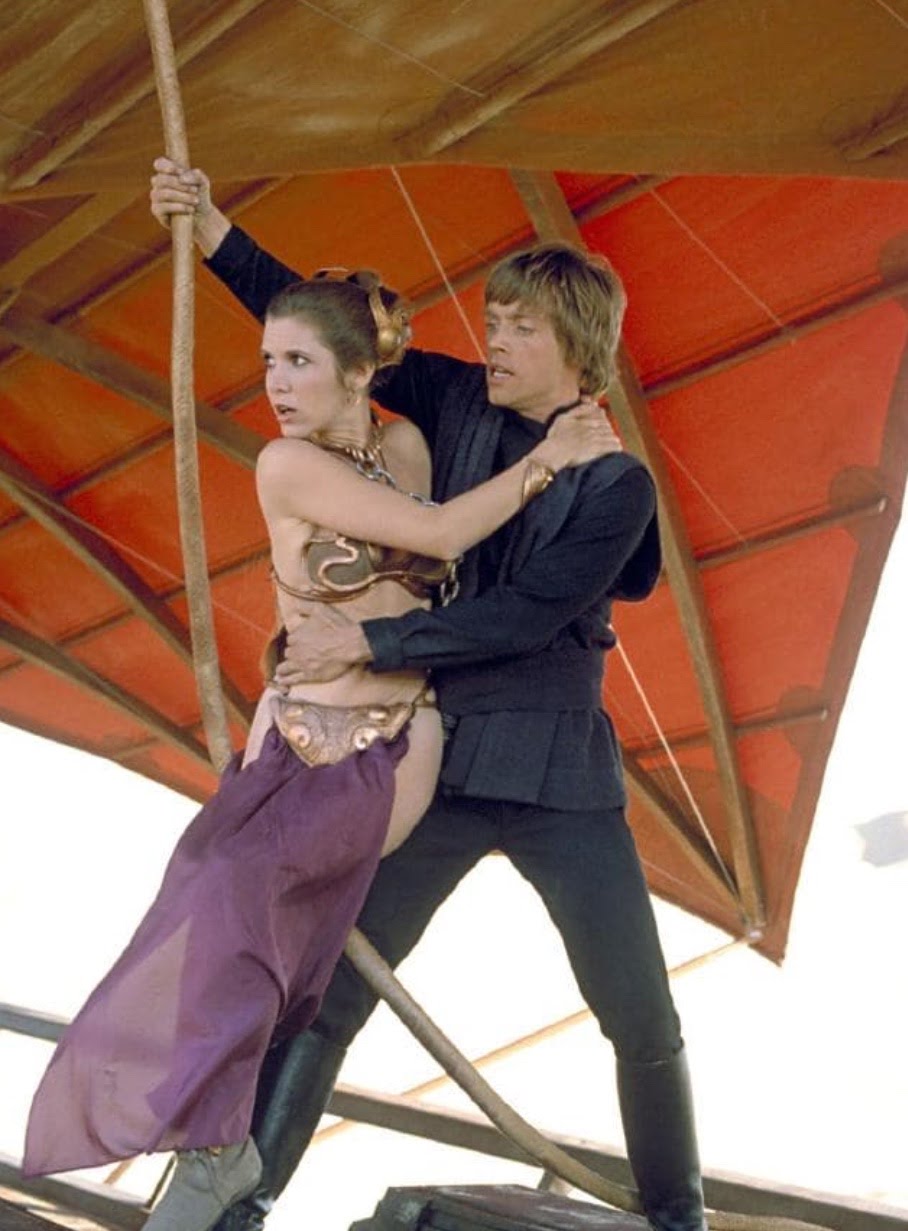
Most are familiar with “Episode VI” and how Luke Skywalker rescues his buddy Han from Jabba the Hutt (while Princess Leia sits nearby in “that bikini!”), the Rebels travel to the planet Endor, meet the cuddly Ewoks, shut down the new Death Star and Luke faces Darth Vader for an epic lightsaber duel.

“Return of the Jedi” took criticism at the time (and to this day) for being a “glorified Muppet Movie” and pandering to the kiddie, action figure crowd.  What many have missed is how skillfully the screenplay by Lucas and Lawrence Kasden balances a number of stories, while tying up loose ends and subtly expressing some significant themes.

Reigning in all of the controlled chaos of practical effects and puppetry and balancing it with the emotional core of the story and its quiet moments was director Richard Marquand, whose only major film at this point was the modest 1981 thriller “Eye of the Needle.”

With all that’s going on in “Jedi,” Marquand doesn’t get the credit he deserves for so effectively pulling its all together and also getting impactful performances from the leads, Mark Hammill, Harrison Ford and Carrie Fisher.

Playing characters that, at this point, had been alive on screen for six years, the cast doesn’t miss a beat with one another, feeling very comfortable in their alter egos.

What most audiences remember more than anything from “Return of the Jedi” are the action set pieces, which have now become iconic: the slime and seediness of Jabba the Hutt (an engineering marvel of puppetry), as well as his Tatooine palace; the brilliantly choreographed escape from Jabba’s sail barge; the dizzying speeder-bike race and the battle at the finale of the film.

As that final, non-stop sequence switches back and forth from an insanely intricate dogfight in space between the Empire and the Rebels to the Ewoks fighting alongside the Rebels on the forest planet of Endor to the lightsaber showdown between Luke and Vader, we as an audience can feel “Return of the Jedi” building to its amazing crescendo.

In today’s age of film franchises, “Return of the Jedi” may seem like something we see multiple times a year at our local theater.  But, in 1983, this farewell to characters that had become like family was an emotional ride.  The “Star Wars” film series not only transformed movies, but had become a cultural flashpoint that inspired generations (and continues to do so).

As “Return of the Jedi” comes to a close, there’s a nice sense of peace to the proceedings, not just as the Empire is defeated within the story, but also as Luke and Anakin look upon each other for the first time as father and son, there’s also a strong sense of the power of family that comes through from the film’s core.

It’s one of “Jedi’s” powerful messages, as we see literal and figurative families form bonds throughout the film.  Additionally, as the Ewoks use their crude, hand crafted tools and weapons against the Empire, the film realizes another of its messages: the power of man and nature against machine and technology.

Many may not have initially realized these themes when “Return of the Jedi” was first released on May 25, 1983, but the power of these messages, like the power of the film itself, is just one of the reasons so much of the film has become part of our pop culture consciousness.

“The Return of the Jedi” stands as the culmination of a film trilogy that was made for, what creator George Lucas called “a generation growing up without fairy tales.”

And for that generation who thought that they had watched the “Star Wars” saga sail into a Tatooine-like sunset 35 years ago, “Return of the Jedi” will always hold a special place.


Sources: Wikipedia


Friday, April 27, 2018

A “Marvel”-ous Beginning: Celebrating the 10th Anniversary of “Iron Man.”


By Michael Lyons

It’s what Super Hero movies are all about.

“Iron Man” debuted ten years ago this summer: a compelling origin story filled with terrific action set pieces, sharp humor, a lead character full of charm, timely themes and yes, even heart.

Based on the Marvel comic book that dates back to 1963, “Iron Man” also ushered in a series of movies and film franchises, the likes of which had never been seen before and culminates this weekend with “Avengers: Infinity War,” the grand opus of the Marvel Cinematic Universe.

And it all began with the story of Tony Stark, a smart-aleck billionaire playboy who has inherited Stark Industries, a defense company, from his father.  While in war torn Afghanistan, demonstrating his company’s latest missile, Tony is taken captive by a terrorist group and forced to build another weapon.  In order to survive and escape, Tony crafts a crude, iron suit.

Once back home, Tony finds another “war” brewing, when he discovers that not all at his company is as it seems.  He begins to refine and redesign his suit, soon emerging as the red and gold glowing hero, Iron Man.

With that story comes a most compelling hero’s journey.  By almost losing his heart to shrapnel, the smug Tony Stark gains his true heart, when he decides to turn his back on the world of war and fight for those who can’t help themselves.

“Iron Man” hinges on the power of its leading man and Robert Downey, Jr. is quite powerful as Stark/Iron Man.  In a career-defining role, Downey brings much of his own quick, knowing wit to the role and combines it with sympathetic vulnerability.  His Tony Stark is a truly unique creation, standing out among numerous other cardboard-like super hero alter egos.

Downey is backed up by a perfect supporting Cast, including Gwyneth Paltrow as love interest Pepper Potts, who perfectly lobs verbal barbs back at Tony; Jeff Bridges is all rumbling, ominous tones as the villainous Obadiah Stane and Terrance Howard as Tony’s best friend Rhodey has such great chemistry with Downey, it makes one wonder what the future movies would have been like with him (he was later replaced by Don Cheadle).

At the helm of “Iron Man” is a most unexpected choice for director, Jon Favreau.  Best known for lighter fare like “Elf” and “Zathura,” he directs “Iron Man” with a deft hand, knowing when to inject humor and also choreograph exciting action scenes that demonstrate real stakes.

“Iron Man” was released on May 2, 2008 and began a parade of films that has followed almost each year since.  Additionally, the film helped make Marvel Studios a force to be reckoned with in Hollywood, as they took a creative approach to creating film series and sequels.

Unlike previous film franchises, Marvel’s exist in their “shared universe,” much like comics themselves, with characters and stories appearing in and out of each film and allowing moviegoers to have a real investment in them.  For a decade, these Marvel characters have become true heroes, re-igniting the comic book movie genre and moviegoing itself (not to mention defining the now eagerly awaited “post credit sequence”).

And it all started with the story of Tony Stark, the man who finally looked beyond himself to become “Iron Man.”

It’s what Super Hero movies are all about.


Sources: Wikipedia

IMDb

Saturday, April 14, 2018

Many Happy “Returns”: Laugh Away Tax Day with Two Classic Sitcoms


By Michael Lyons

For many, April 17th will be just another Tuesday.  Others, however, have seen that deadline looming like a dark cloud on an every approaching horizon.

Tax Day.

A large part of our collective, responsible society, who have procrastinated since W2’s made their first appearance in their mailboxes earlier this year will spend the days before April 17th pouring over Tax Forms like they’re cramming for a final exam.

If filing your income taxes has you stressed, take an hour break and spend some time with two classic TV sitcom episodes that centered on income taxes and did what few have done: they found humor in the I.R.S.


“The Honeymooners:” “The Worry Wart” (Originally aired April 6, 1956)

Ralph Kramden (Jackie Gleason, who else?!?) receives a letter from the I.R.S.  At first, thinking it’s his tax return, he believes that this is good news...until he realizes it’s a letter asking him to report to their office the next morning.

The already nervous Brooklyn bus driver becomes completed bug-eyed and anxious, when he becomes convinced that he is being audited.  What follows is a night in which Ralph and best friend Ed Norton (Art Carney, again, who else?!?) stay up, pouring over Ralph’s tax return, searching desperately for any mistakes.

The scene ranks as one of the comic duo’s most hysterical moments, filled with sharp, back-and-forth banter (and a “flub” by Gleason that remained in the show), which results in Ralph, once again, throwing Ed out of the apartment.

“When I get to five,” bellows Ralph, “You better be out the door.  Now, I’m going to count!”

“I’m not scared of you,” answers Norton.  “If you could count, they wouldn’t be investigating your taxes!”

Of course, the next day, at the I.R.S., things are not as dire as they seem (no spoilers here), but through it Ralph and Ed learn a lesson about honesty and integrity.  That’s right, the whole 75 cents Ralph won at the company picnic gets accounted for!


“The Odd Couple”:  “The Ides of April.” (Originally aired January 19, 1973)

One stormy and rainy New York night, a letter from the I.R.S. arives at the apartment of sloppy sportswriter Oscar Madison (Jack Klugman) and fastidious photographer Felix Unger (Tony Randall).

Oscar seems like the perfect candidate for an audit letter, but instead, they find out it was meant for Felix, who, just like Ralph on “The Honeymooners,“ has to report to the I.R.S. office the next morning.

Felix gets himself so worked up that when Oscar finds him the next morning he thinks Felix has taken a whole bottle of sleeping pills.  What he finds out is that Felix has only taken one pill...at seven in the morning!

When Felix gets to the I.R.S., he is so worked up that he unwittingly turns in Oscar, when, the heat of the moment, he suggests that instead of him that the Agent investigate someone like his roommate, whose returns are sloppy and late.

Felix then discovers the real reason they called him in: he forgot to sign his check.  In fact, the reason that the I.R.S asked him to come in, in person, is that they wanted to meet the person who turns in the most perfect tax return year after year.  As the staff gathers and applauds, Felix smiles and says, “Many happy ‘returns!’”

However, it’s not all smiles when Felix gets home, when it’s learned that, thanks to Felix’s off-handed remark, Oscar is now being audited.  In fits of panic Oscar attempts to fix his return and pour over receipts that are written on everything from footballs to cocktail napkins.

It’s not looking good for Oscar when he gets his turn at the I.R.S., but Felix arrives at the last minute with some new found information that may just save his roommate!

Again, no spoilers, except that this is Randall at his neurotic-best as Felix while Klugman does a great, slow-burn with his frustration and anxiety.


Both of these episodes, like both series themselves, do what they do best: finding the character and humor in life’s trails and tribulations.  In fact, DVD’ sets of both “The Honeymooners” and “The Odd Couple” would be a great way to spend one’s tax return!


Sources: Wikipedia
IMDb